
Disposable cutlery is widely used in restaurants, cafés, takeaway outlets, catering services, and food delivery businesses. It provides a practical way to serve meals without requiring customers to carry their own utensils or businesses to manage the washing and storage of reusable items. Different types are designed for specific foods, serving conditions, and customer needs.
Understanding the available options helps food businesses choose utensils that suit their menus and service requirements. Selecting the right Disposable Cutlery can also improve the takeaway experience by ensuring customers receive suitable utensils with their meals, whether they are eating at work, travelling, or enjoying food at home.
1. Disposable Forks
Disposable forks are among the most commonly used eating utensils. Their pronged design makes them suitable for picking up solid foods and handling meals that contain small or bite-sized ingredients.
They are frequently included with:
- Pasta and noodle dishes
- Fresh salads and fruit portions
- Rice meals and vegetable dishes
- Cakes, pastries, and other desserts
- Sandwiches and snack combinations
Forks are available in different sizes and materials. Smaller options are useful for desserts, while larger forks are generally more suitable for full meals. Businesses should consider strength and grip when selecting forks for foods that require more pressure.
2. Disposable Spoons
Disposable spoons are designed for foods that are soft, liquid, or difficult to handle with a fork. They are particularly useful for meals served in bowls, cups, and containers.
Common uses include:
- Soups and broths
- Yogurt and pudding
- Ice cream and other frozen desserts
- Porridge and breakfast bowls
- Rice dishes and soft meals
The depth and size of a spoon can affect how comfortably customers eat different foods. Deeper spoons are useful for soups, while smaller spoons are often preferred for desserts, tea, and tasting portions.
3. Disposable Knives
Disposable knives are designed for cutting softer foods, spreading toppings, and supporting meals that require a cutting utensil. They are commonly provided with food that cannot be comfortably eaten using only a fork or spoon.
Typical uses include:
- Cakes and soft pastries
- Sandwiches and burgers
- Soft cooked vegetables
- Bread and bakery products
- Catering meals with sliced food portions
Not all disposable knives offer the same cutting performance. Businesses should choose products with suitable strength and edge design for the food being served rather than assuming they can replace conventional metal knives in every situation.
4. Disposable Cutlery Sets
Cutlery sets combine two or more utensils, making them convenient for complete takeaway meals. Depending on the product, a set may contain a fork, spoon, knife, or napkin.
These sets are commonly used by:
- Restaurants preparing takeaway orders
- Food delivery companies
- Office lunch providers
- Airlines and travel catering services
- Event organizers and outdoor food vendors
Providing a complete set reduces the need for staff to select individual utensils for every order. It also helps customers receive the basic tools they need in one convenient package.
5. Plastic Disposable Cutlery
Plastic cutlery is a familiar option in many food service environments because it is lightweight and available in different shapes and sizes. It can be used for a range of cold and room-temperature foods, depending on the product specifications.
Common applications include takeaway meals, parties, picnics, and casual food service. However, businesses should check applicable regulations because restrictions on certain single-use plastic products vary by location.
When evaluating plastic options, it is important to consider durability, intended food use, local disposal facilities, and compliance requirements.
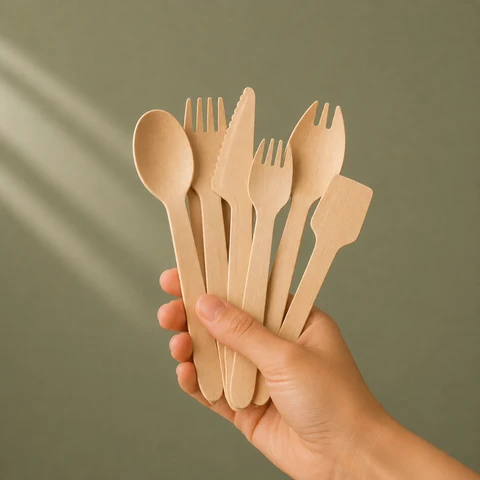
6. Wooden Disposable Cutlery
Wooden cutlery offers an alternative to conventional plastic utensils. It is commonly made from materials such as birchwood and is used by businesses looking for a different appearance and material profile.
Its common applications include:
- Outdoor events and picnics
- Food trucks and takeaway restaurants
- Catering services
- Dessert and snack counters
- Casual dining and food sampling
Wooden forks, spoons, and knives are available in different sizes. Their texture and feel may differ from plastic alternatives, so businesses should test samples to ensure they provide a comfortable eating experience.
7. Paper-Based and Other Alternative Materials
Some food service businesses explore cutlery made from newer or alternative materials as part of their packaging choices. These products may be designed to reduce reliance on conventional plastic, but their performance and disposal requirements vary.
When comparing alternatives, businesses should examine:
- Material composition and product specifications
- Strength when used with different foods
- Resistance to moisture and heat, where relevant
- Applicable food-contact safety requirements
- Verified recycling or composting information
Terms such as recyclable, biodegradable, and compostable have different meanings. Businesses should check the relevant certifications and local waste management facilities before selecting a product based on its environmental claims.
How to Choose the Right Disposable Cutlery
The best type of cutlery depends on the food being served, the way customers receive their meals, and the business’s operating requirements. A few practical considerations can make purchasing decisions easier.
Consider the menu: Soups require suitable spoons, while pasta and salads are generally easier to eat with forks. Meals containing several food types may need a complete set.
Check product strength: Utensils should be strong enough for their intended use without bending or breaking during normal eating.
Choose suitable sizes: Small utensils may work well for desserts, but full meals usually require larger options that are comfortable to hold.
Review packaging: Individually wrapped cutlery can support organized distribution and help protect utensils before use. Grouped sets may be more convenient for takeaway orders.
Compare materials and costs: Consider product quality, purchase quantities, regulatory requirements, and disposal arrangements rather than choosing solely by price.
Common Industries That Use Disposable Cutlery
Disposable utensils are used across many food-related industries because they simplify distribution and support different serving formats.
- Restaurants and cafés: Provide cutlery with takeaway meals and selected dine-in orders.
- Food delivery services: Include utensils so customers can eat meals without additional preparation.
- Catering companies: Distribute suitable cutlery at corporate functions, weddings, and large gatherings.
- Food trucks and street vendors: Serve customers quickly in locations where washing facilities may be limited.
- Hotels and travel services: Supply utensils for packed meals, room service, and selected travel catering operations.
- Schools and workplaces: Use disposable options for events, occasional meals, and high-volume food service.
Conclusion
Different types of disposable cutlery serve different purposes, from forks for solid meals and spoons for soups to knives for cutting and complete sets for takeaway orders. Material choices also influence durability, appearance, cost, and disposal requirements.
By understanding these differences, food businesses can select utensils that match their menus and customer expectations. A suitable cutlery choice makes meal service more organized, helps customers enjoy their food conveniently, and supports efficient daily operations.
Disposable cutlery makes food service more convenient by simplifying meal preparation, supporting organized takeaway operations, and giving customers ready-to-use utensils. It can also help restaurants, delivery kitchens, and catering businesses manage high-volume service with less handling of reusable equipment.
By choosing suitable materials, practical designs, and appropriate quantities, food businesses can improve everyday service while considering hygiene, customer needs, and responsible waste management. The right cutlery solution supports a smoother experience for both the people serving meals and those enjoying them.