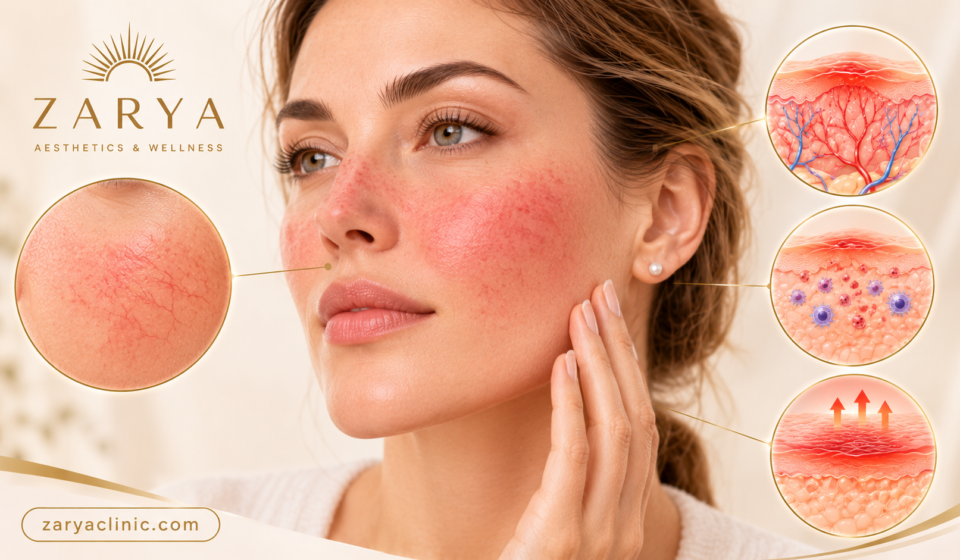

If your cheeks stay flushed long after a warm drink, a brisk walk, or a stressful meeting, you are far from alone. Rosacea is a common, long-term skin condition affecting millions of people, and persistent facial redness is its most recognizable sign. The encouraging news is that researchers now understand rosacea better than ever before, and modern care can calm both the skin and the confidence that comes with it. In this guide, we explain what is happening beneath the surface, why the redness lingers, and how a trusted skin clinic in Kensington can help you feel comfortable in your skin again.
What Exactly Is Rosacea?
Rosacea usually appears between the ages of 30 and 60, most often on the central face: the cheeks, nose, chin, and forehead. It often begins as occasional flushing that comes and goes. Over time, the redness can last longer and eventually become constant. Some people also notice tiny visible blood vessels, small bumps that resemble spots, a warm or stinging sensation, or dry, sensitive skin. Because symptoms vary so widely, people often mistake rosacea for blushing, sunburn, or acne. Getting the right diagnosis is the first step towards effective rosacea treatment in London, and it opens the door to a clear, personalized plan.
The Blood Vessel Connection
Persistent redness often starts with the tiny blood vessels just beneath the skin’s surface. In rosacea, these vessels react more strongly than usual to everyday stimuli such as heat, sunlight or emotion. They widen to let more blood flow, creating that familiar flush. Normally, the vessels return to their usual size quickly. In rosacea, they can stay dilated for longer, and with repeated episodes they may become permanently enlarged. This is why some people notice fine red lines across their cheeks. Understanding this process helps explain why a skin clinic in Kensington often targets the vessels directly with specialist, light-based therapies.
The Nervous System and Inflammation
Research suggests rosacea involves a heightened response between the skin’s nerves and the immune system. Sensory nerves can release chemical messengers that widen blood vessels and trigger low-level inflammation. In rosacea-prone skin, the immune system may also produce more inflammatory proteins, keeping the area warm, pink, and reactive. Think of it as a smoke alarm that is a little too sensitive: it goes off at the slightest cue. This is a helpful insight, because many modern approaches to rosacea treatment in London focus on calming this overactive response rather than simply masking the color.
The Skin Barrier and Microscopic Helpers
Healthy skin acts like a protective shield, keeping moisture in and irritants out. In rosacea, this barrier can be less robust, which allows the skin to lose water and react more easily to products, weather, and temperature changes. Tiny mites called Demodex live naturally on everyone’s skin, but they tend to be more abundant on rosacea-prone faces and may contribute to irritation in some people. Genetics also play a part, as rosacea often runs in families and is more common in people with fair skin. Specialists at a skin clinic in Kensington consider all of these factors when building a tailored routine.
Why the Redness Becomes Persistent?
So why does a temporary flush turn into lasting redness? The answer lies in repetition. Each flare-up stretches the blood vessels and sustains inflammation. Over months and years, the vessel walls can lose some of their ability to spring back, and the surrounding skin may remain mildly inflamed. The result is baseline redness that no longer fully fades. The reassuring part is that early action makes a real difference. Calming flare-ups sooner helps protect the vessels from lasting change, so seeking professional rosacea treatment in London at the first signs can lead to noticeably better long-term results.
Common Triggers Worth Knowing
Everyone’s triggers are different, but several culprits appear repeatedly. Sunlight is the most widespread, followed by hot drinks, spicy food, alcohol, hot baths, strong winds, intense exercise, and emotional stress. Some skincare ingredients, such as alcohol-based toners and harsh exfoliants, can also provoke a reaction. Keeping a simple diary for a few weeks can reveal your personal pattern. Once you know what sets your skin off, you can plan around it without giving up the things you enjoy. A caring team at a skin clinic in Kensington can help you interpret these patterns and adapt your lifestyle sensibly.
Treatments That Truly Help
There is plenty of reason for optimism. Prescription creams and gels can reduce inflammation and redness, while certain oral medicines help with more stubborn symptoms. Vascular lasers and intense pulsed light treatments target visible vessels and can dramatically soften persistent color. Gentle, barrier-supporting skincare and daily broad-spectrum sunscreen form the foundation of long-term control. Many people see visible improvement within a few weeks of starting a suitable plan. Choosing evidence-based rosacea treatment in London from qualified professionals ensures safe, personalized care that adjusts as your skin responds over time.
Everyday Habits for Calmer Skin
Small daily choices add up. Wash your face with lukewarm water rather than hot, and pat dry instead of rubbing. Choose fragrance-free, soothing products and introduce new ones one at a time. Wear a high-factor mineral sunscreen every day, even when the sky is grey, and a wide-brimmed hat in bright weather. Cool, calming foods, stress-relief practices like walking or deep breathing, and a consistent sleep routine can help reduce flare-ups. These simple steps work best alongside professional guidance, which gives you confidence that you are caring for your skin in exactly the right way.
Feel Confident in Your Skin Again
Persistent facial redness can feel frustrating, but you don’t have to simply accept it. Rosacea is a well-understood, manageable condition, and thousands of people achieve calmer, clearer and more comfortable skin with the right support. Whether your redness is just beginning or has been with you for years, effective options fit your needs, lifestyle, and goals. Book a consultation at a welcoming skin clinic in Kensington and take the first step towards skin that looks and feels as healthy as you deserve.
