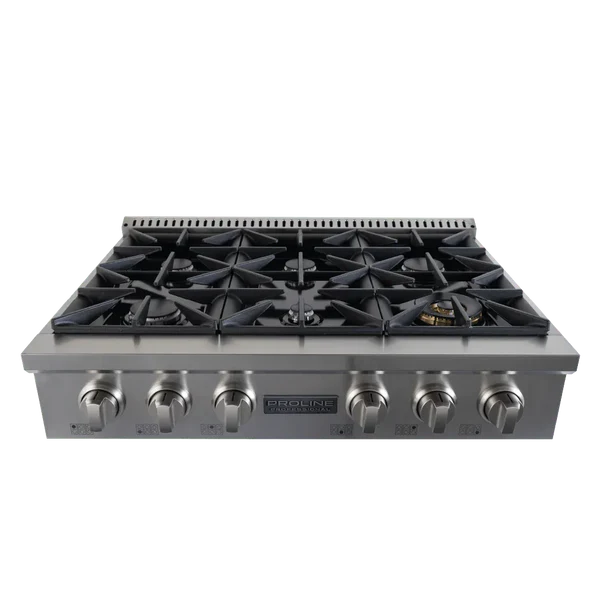
Few kitchen upgrades change daily cooking as noticeably as switching to a flame. Heat appears the moment a knob turns, adjusts instantly, and disappears just as fast, which gives cooks a level of control that many electric surfaces struggle to match. For homeowners planning a remodel, gas stovetops offer a flexible alternative to a full range, freeing cabinet space below and allowing the oven to sit elsewhere. Before choosing one, it helps to understand how the components work together. The sections below cover heat delivery, sizing, materials, grates, safety, and installation.
How Gas Cooktops Deliver Heat
A gas burner mixes fuel with air, and the flame heats cookware directly. Output is measured in BTUs, so a burner around 5,000 BTU suits gentle simmering, while one above 15,000 BTU boils water and sears meat quickly. Most gas stovetops combine several strengths across four to six burners, letting you prepare multiple dishes at once. Sealed burners keep spills on the surface instead of letting them drip inside. Look for stable, evenly spaced flames, since ragged or yellow flames may signal a fuel or air mixture problem.
Sizing Your Cooktop Correctly
Standard widths run from 24 to 48 inches, and 30 inches is the most common choice. Wider units provide extra burners or a griddle, yet they need more countertop area and stronger ventilation. Measure the existing cutout width and depth, then compare it with the manufacturer’s template. Confirm the dimensions twice before ordering. Leave enough clearance from walls and the countertop edge for pans and handles. If you are changing layouts, remember that base cabinets beneath the cooktop must allow room for the gas connection.
Stainless Steel or Glass Surfaces
Surface material affects looks, durability, and cleaning. Many shoppers choose stainless steel stovetops because the metal tolerates high heat, resists scratches, and complements modern appliances. Brushed finishes hide fingerprints better than polished ones. Ceramic glass offers a seamless, sleek look but can crack if struck by heavy cookware. Enameled surfaces are affordable and come in several colors. Choose the material that fits your cleaning habits, since sugary spills and grease behave differently on each.
Grate Styles and Cookware Fit
Cast-iron grates are heavy, stable, and long-lasting, and continuous designs let you slide pots between burners without lifting. Flat, wide grates support large stockpots, while smaller grates suit compact pans. Check that a griddle or wok ring can be added later if you cook that way. Many stovetops also accept optional accessories such as simmer plates. Bring your favorite cookware to a showroom if possible, since a pan that wobbles on the grate is frustrating.
Ignition, Safety, and Shutoffs
Electronic ignition sparks the burner without a standing pilot, which saves fuel and reduces maintenance. Flame failure protection stops gas flow if a burner goes out, and some models reignite automatically. Knob locks help protect young children, and front-facing controls keep hands away from heat. Install a carbon monoxide detector near the kitchen, and keep flammable items such as towels and paper away from burners. Know where your gas shutoff valve is before an emergency occurs.
Installation and Ventilation
Correct installation of gas stovetops requires a dedicated gas line, an approved flexible connector, and a shutoff valve within reach. Natural gas and propane need different orifices, so confirm your fuel and check whether conversion parts come with the unit. A licensed professional should connect the appliance and test for leaks. Pair the cooktop with a hood vented outdoors, sized to match its width and output, so moisture, heat, and combustion byproducts leave the room. Follow clearance rules for overhead cabinets and nearby walls.
Conclusion
Good decisions come from matching burner strength, size, surface material, and safety features to the way you actually cook. Careful measuring and early planning for gas and ventilation prevent costly surprises later. Shoppers who want to review a wide selection in one place can start with Smart Home Luxury and compare finishes, widths, and features side by side. With thoughtful choices, gas stovetops provide responsive, dependable cooking that keeps its appeal through years of everyday use.