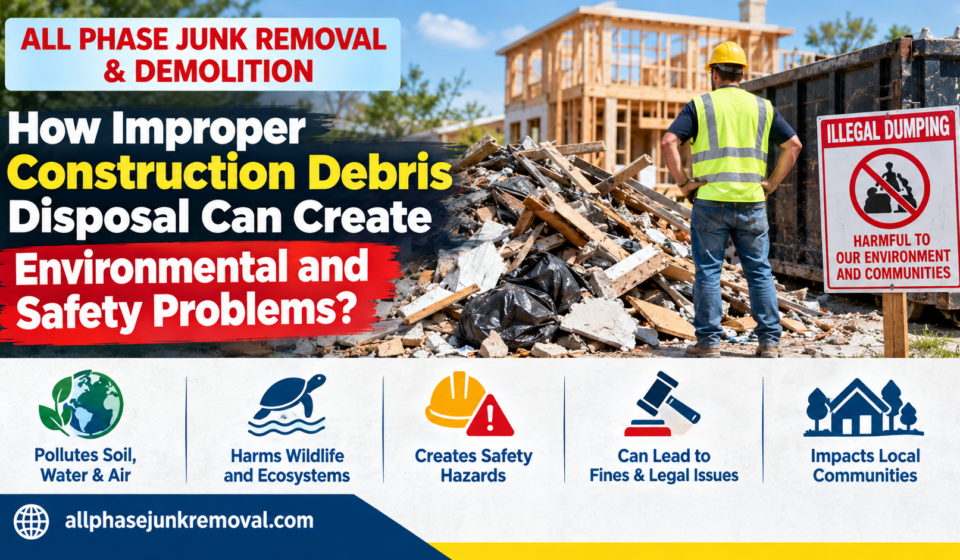

A renovation project may end when the final nail is driven, but the work is not truly finished when piles of broken drywall, wood, concrete, insulation, and other materials remain behind. What appears to be an ordinary pile of construction waste can quickly become an environmental hazard, a safety concern, and a costly cleanup problem.
Responsible debris management is therefore an essential part of completing any construction, remodeling, demolition, or repair project. Proper debris removal helps keep properties safe and prevents construction waste from creating problems long after the project itself is over.
Construction Debris Is More Than an Eyesore
Construction waste can include concrete, bricks, lumber, drywall, roofing materials, insulation, metal, glass, wiring, flooring, and discarded fixtures. Depending on the project, some materials may also contain substances that require specialized handling.
Leaving these materials on a property can obstruct walkways, damage landscaping, attract pests, and create trip and puncture hazards. Sharp nails, broken glass, exposed screws, and unstable debris piles can injure workers, residents, visitors, or children.
Even materials that appear harmless can become dangerous when exposed to rain, wind, or changing temperatures. Professional debris removal ensures waste is collected and handled systematically instead of being left scattered around the property.
How Improper Disposal Damages the Environment?
Construction debris does not simply disappear when it is placed beside a road, dumped on vacant land, or mixed with ordinary household trash. Improper disposal can introduce pollutants into soil and water.
Rainwater can carry particles, chemicals, and other contaminants from construction waste into storm drains, streams, and surrounding soil. Certain materials may release harmful substances as they deteriorate. Paint residues, treated wood, adhesives, solvents, and other construction-related products require particular care.
Responsible waste handling reduces the possibility of contamination while also supporting recycling and material recovery. A structured cleanup process, including debris removal, can help separate reusable, recyclable, and disposal-only materials.
Construction Waste Creates Serious Fire Risks
Some construction materials are highly combustible. Wood scraps, cardboard packaging, insulation, roofing materials, and certain chemical products can contribute to fire hazards when stored improperly.
A debris pile can also restrict access to electrical panels, utility connections, fire exits, or emergency pathways. In commercial or occupied properties, this can create additional concerns for employees, residents, customers, and emergency personnel.
Proper cleanup reduces the amount of combustible material accumulating on-site and keeps essential access points clear. This is one reason attic clean up services and other specialized cleanup services should address debris rather than simply moving it from one area to another.
Hidden Hazards Remain Inside Buildings
Not every construction debris problem is visible. Remodeling and repair projects can leave behind dust, insulation fragments, drywall particles, wood scraps, wiring, and other materials in concealed areas.
Attics are particularly vulnerable because construction materials can accumulate between joists, around insulation, or near ventilation equipment. Forgotten debris can restrict airflow, create pest-attracting conditions, or become a fire concern.
Professional attic clean up services can help identify and remove unwanted materials from difficult-to-access areas while keeping the surrounding space organized. This is especially important after roofing, electrical, HVAC, insulation, or remodeling work.
Improper Disposal Can Attract Pests
Construction debris can create shelter and nesting opportunities for rodents, insects, and other pests. Piles of lumber, insulation, cardboard, and other discarded materials provide dark, protected spaces where pests may hide.
Once pests establish themselves around a property, they can move into walls, attics, crawl spaces, and occupied areas. This can turn a simple post-construction cleanup issue into a broader property maintenance problem.
Removing debris promptly eliminates many potential hiding places. Comprehensive debris removal is particularly valuable after demolition or renovation projects where large quantities of waste can remain in multiple areas.
It Can Also Increase Legal and Financial Risks
Disposing of construction waste improperly may result in fines, cleanup costs, or other regulatory consequences depending on local waste-management requirements. Dumping debris in unauthorized locations can also create liability if the waste causes environmental damage or injures another person.
Businesses and contractors may face additional reputational concerns when waste is left at a project site or transported without appropriate disposal procedures.
Planning for waste management before construction begins can help avoid these issues. Professional debris removal provides a more controlled approach by ensuring unwanted materials are collected and cleared instead of becoming a lingering liability.
Proper Cleanup Supports Safer Worksites
A clean construction site is easier to navigate, inspect, and maintain. Removing waste regularly helps reduce trip hazards, sharp-object injuries, blocked pathways, and accidental contact with hazardous materials.
Cleanup should not necessarily wait until the entire project is finished. Depending on the size and nature of the work, debris should be managed throughout the project so that waste does not accumulate into unstable or difficult-to-handle piles.
Specialized attic clean up services can also address debris in confined spaces where conventional cleanup methods may be ineffective or unsafe.
Responsible Disposal Can Reduce Waste
Not every piece of construction material belongs in a landfill. Certain metals, concrete, wood, cardboard, and other materials may be suitable for recycling or recovery when properly separated.
Sorting materials before disposal can reduce landfill volume and improve the possibility of recovering useful resources. It also creates a more organized process for contractors and property owners.
A professional cleanup provider can help streamline this process by collecting debris, separating materials where appropriate, and directing waste toward suitable disposal or recycling channels. Effective debris removal therefore contributes to both property safety and more responsible waste management.
Make Debris Management Part of Project Completion
Construction may transform a property, but leftover waste can undermine the results if it is not handled correctly. Environmental contamination, fire hazards, pest activity, injuries, blocked access, and unnecessary disposal costs are all potential consequences of poor debris management.
The best approach is to treat cleanup and disposal as an integral part of construction planning rather than an afterthought. From general debris removal to specialized attic clean up services, professional cleanup can help ensure that every part of the property is left safer, cleaner, and ready for use.
When the tools are packed away and the project is complete, responsible debris disposal is what turns a finished construction site into a truly finished property.