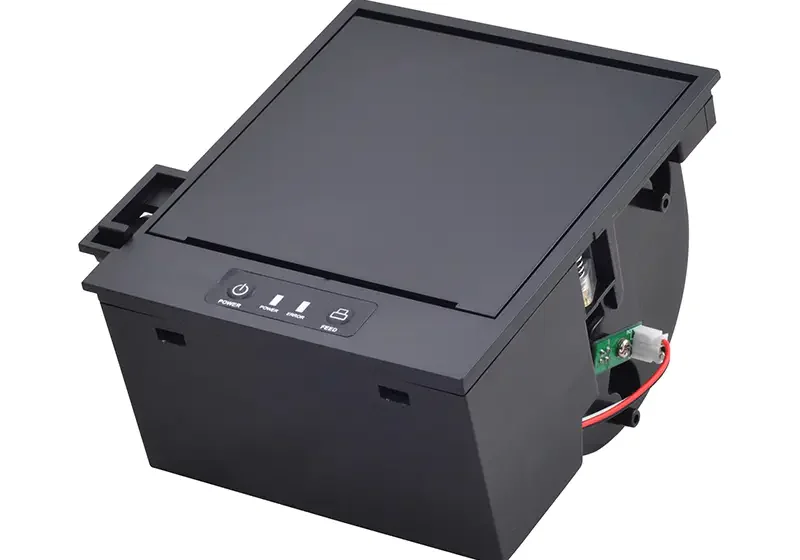

Technology has changed how compact printers are designed, produced, tested, and integrated into industrial equipment. Modern manufacturing combines mechanical engineering with electronics, software, automation, and quality-control systems to create printing mechanisms that can work reliably inside larger machines.
For a Panel Printer Manufacturer, technology is particularly important because these printers often need to meet strict requirements for size, connectivity, paper handling, and integration with automated equipment. Modern production methods can help manufacturers address these requirements while maintaining consistency across different units.
Digital Design and Engineering
Computer-aided design tools allow manufacturers to develop detailed printer components and assemblies before physical production begins. Engineers can examine dimensions, mounting points, component placement, and mechanical clearances during the design stage.
Digital modeling can also help identify potential interference between components. This is especially useful for compact printers that need to fit inside restricted equipment enclosures.
Precision Manufacturing
Modern manufacturing equipment can produce small mechanical components with controlled dimensions and repeatable processes. Precision is important for parts such as paper-feed mechanisms, rollers, gears, cutters, and mounting components.
Consistent manufacturing tolerances can help ensure that individual printers perform similarly and fit the equipment for which they are designed.
Automated Production Processes
Automation can be used in different stages of printer assembly and manufacturing. Automated equipment can perform repetitive tasks consistently while reducing variation between production units.
Depending on the manufacturing process, automation may support component placement, assembly, inspection, functional testing, and packaging. Human technicians can remain involved in tasks that require judgment, configuration, or specialized expertise.
Advances in Thermal Printing
Thermal printing technology has become useful for many compact printing applications because it can produce output without conventional ink cartridges or ribbons. Direct thermal systems use heat-sensitive media to create printed images.
Advances in print-head technology, mechanical design, and control systems can contribute to improved print consistency and efficient operation. However, the suitability of thermal printing still depends on the application’s media and environmental requirements.
Electronics and Embedded Control
Modern panel printers rely on electronic components to control printing functions, paper movement, communication, and other operations. Embedded controllers can coordinate these functions based on commands received from a host system.
This allows printers to become part of automated equipment rather than operating only as independent devices. Communication between the printer and host controller can be designed around the requirements of the larger system.
Software and Firmware Development
Firmware is another important part of modern printer technology. It controls how the printer interprets commands and manages functions such as data processing, paper feeding, printing, and cutting.
Software development can also support more flexible formatting and communication. Manufacturers need to validate firmware carefully because an error in software can affect the printer’s behavior even when its mechanical components are functioning correctly.
Digital Quality Control
Technology has also changed how manufacturers inspect and test products. Digital test systems can measure specific characteristics and compare results against predefined requirements.
Automated or computer-assisted testing may evaluate functions such as:
- Print quality
- Paper movement
- Communication
- Electrical performance
- Mechanical operation
- Printing speed
- Cutter operation where applicable
Consistent testing can help identify defective units before they are shipped or integrated into larger equipment.
Prototyping and Product Development
Rapid prototyping technologies can shorten the time required to evaluate new printer designs. Engineers can create prototype components or assemblies and test them before committing to full-scale production.
For specialized applications, prototypes can be installed into actual equipment to evaluate fit, communication, paper handling, and operating performance. Feedback from these tests can then be incorporated into later design iterations.
Supporting Customization
Industrial customers may require printers with specific dimensions, connectors, interfaces, or operating characteristics. Modern engineering tools can make it easier to assess and develop application-specific configurations.
Customization may involve modifying an existing printer platform rather than developing an entirely new product. This approach can help balance specialized requirements with the benefits of an established design.
Data-Driven Manufacturing
Manufacturing systems increasingly use production data to monitor quality and efficiency. Information collected during assembly and testing can help identify recurring issues and areas where processes can be improved.
Data analysis can also support production planning and quality management. When used appropriately, these tools can help manufacturers maintain consistent output as production volumes increase.
Technology and Long-Term Reliability
Technology can support reliability, but advanced equipment alone does not guarantee a dependable product. Printer performance still depends on material selection, mechanical design, manufacturing processes, testing, and appropriate use.
Manufacturers need to combine modern technology with established engineering and quality-control practices. This is particularly important for printers installed in industrial systems where maintenance or replacement may be more complicated.
What Technology Means for Buyers
Customers evaluating an integrated printer should look beyond the presence of advanced technology. More useful questions focus on how technology improves the actual product and its integration into the intended equipment.
Consider asking about:
- The printer’s communication and control capabilities.
- Available technical documentation.
- Manufacturing and quality-control processes.
- Testing methods used before shipment.
- Firmware support and update policies where applicable.
- Customization and engineering capabilities.
- Long-term product and component availability.
These factors provide a clearer picture of how technology is being applied to support the product’s practical requirements.
Conclusion
Technology plays a significant role in modern panel printer manufacturing, from digital engineering and precision production to embedded electronics, firmware, automated testing, and data-driven quality control. These technologies can help manufacturers develop compact printers that integrate effectively with industrial and automated equipment.
However, technology should work alongside sound engineering and quality practices rather than replace them. For businesses selecting an integrated printer, evaluating the manufacturer’s design capabilities, production methods, testing procedures, and technical support can be just as important as examining the printer’s specifications.