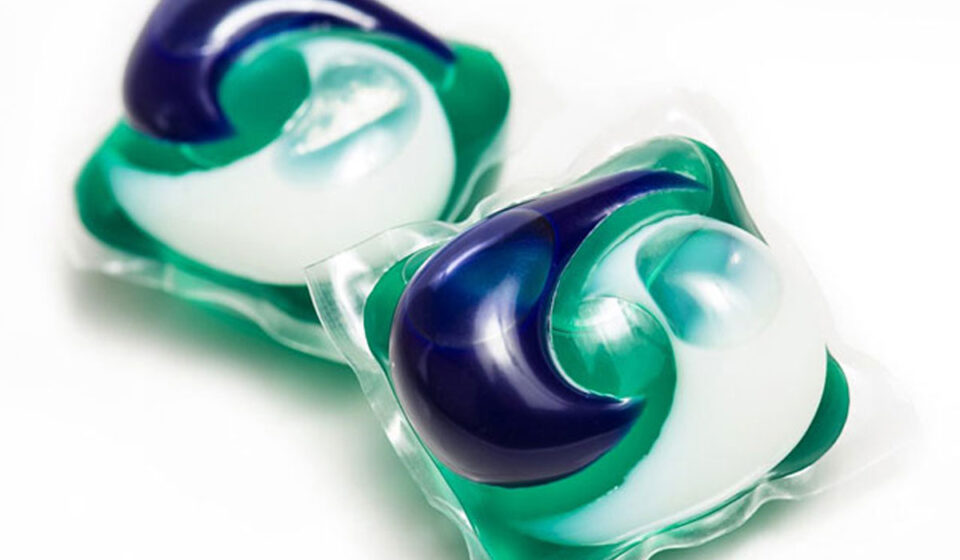

Production consistency is essential when manufacturing laundry pods at scale. Each finished pod needs to meet defined requirements for detergent quantity, dimensions, sealing, appearance, and overall package integrity.
A Laundry Pod Making Machine supports consistency by coordinating several packaging operations within a controlled production cycle. Automated film feeding, product dosing, forming, sealing, and cutting can reduce variations between individual pods when the equipment is properly configured and maintained.
Consistent Product Dosing
One of the most important factors in pod consistency is the amount of detergent placed into each package. Variations in filling can lead to differences in product dosage and overall pod weight.
Automated dosing equipment is designed to deliver a repeatable quantity according to established production parameters. The filling method should be selected according to the detergent’s viscosity, density, flow behavior, and formulation.
Controlled Film Feeding
Water-soluble film needs to move through the packaging system at a stable rate and remain properly aligned. Irregular film movement can affect pouch dimensions and create problems during filling or sealing.
Automated feeding and positioning mechanisms help maintain a consistent film path. Sensors may also be used to monitor film position and detect deviations during operation.
Uniform Pod Formation
The forming stage determines the basic dimensions and shape of each pouch. Consistent forming is important because differences in pouch geometry can affect filling capacity, sealing, and finished appearance.
Once suitable parameters have been established for a specific format, automated controls can help reproduce those settings throughout production.
Reliable Sealing
A consistent seal is essential for maintaining the integrity of a laundry pod. Temperature, pressure, contact time, film alignment, and surface cleanliness can all influence the result.
Automated sealing systems can maintain defined operating conditions during repeated production cycles. Regular inspection and maintenance are still necessary to ensure those conditions remain stable.
Accurate Cutting
Cutting separates individual pods after the film has been formed and sealed. If cutting positions vary, finished pods may have inconsistent dimensions or uneven edges.
Synchronization between film movement and cutting mechanisms helps maintain uniform separation. This becomes particularly important during continuous, high-volume production.
Reduced Manual Variation
Manual production involves repeated actions that can vary from one operator or production cycle to another. Automation reduces the number of repetitive tasks that depend directly on manual execution.
Operators can instead focus on monitoring equipment, replenishing materials, conducting inspections, and responding to process deviations.
Stable Production Parameters
Several machine parameters work together to determine finished-pod quality. These can include:
- Detergent filling quantity
- Film feeding speed
- Pouch dimensions
- Sealing temperature
- Sealing pressure
- Sealing time
- Cutting position
- Machine cycle speed
Keeping these parameters within defined ranges helps create a more repeatable production process.
Monitoring During Operation
Production consistency is easier to maintain when machine conditions are monitored throughout the manufacturing cycle. Sensors and control systems can provide information about film positioning, machine timing, and other process conditions.
When an abnormal condition is detected, operators can investigate and make corrections before the problem affects a significant number of pods.
Consistency Across Different Pod Sizes
Manufacturers may produce several pod formats for different detergent products or dosage requirements. Each format can require its own filling, forming, sealing, and cutting settings.
Recording validated parameters for each format can make changeovers more predictable. It also helps operators reproduce established production conditions when a particular pod size is manufactured again.
The Importance of Film Quality
Even a well-controlled machine cannot compensate for unsuitable or inconsistent film. Variations in film thickness, width, strength, flexibility, or sealing characteristics can influence the packaging process.
Film should be stored and handled according to appropriate conditions. Consistent incoming material quality provides a more stable foundation for automated production.
Detergent Characteristics Matter
The detergent itself can affect production consistency. Changes in viscosity, density, temperature, or flow behavior may influence how the filling system performs.
Manufacturers should establish suitable product specifications and monitor significant changes in formulation or material properties. Filling parameters may need adjustment when product characteristics change.
Preventing Contamination
Detergent residue in the wrong part of the packaging system can interfere with film sealing and package appearance. This is especially relevant when handling liquid or gel formulations.
Routine cleaning of filling and sealing areas helps reduce contamination-related defects and supports more stable operation.
Preventive Maintenance
Production consistency depends partly on the mechanical condition of the equipment. Worn cutting components, misaligned film guides, inaccurate sensors, or contaminated sealing surfaces can gradually affect results.
Preventive maintenance allows these issues to be identified before they create widespread production variation. Maintenance schedules should cover the components that directly influence packaging accuracy.
Quality Checks During Production
Regular sampling provides a practical way to monitor consistency. Depending on the production requirements, manufacturers may check:
- Pod weight or fill quantity
- Pouch dimensions
- Seal appearance
- Seal integrity
- Film alignment
- Cutting accuracy
- Overall package appearance
Recording these results can help production teams identify gradual changes and investigate recurring defects.
Operator Training
Automation does not remove the need for skilled operators. Personnel should understand normal machine operation, approved parameters, changeover procedures, inspection requirements, cleaning, and basic troubleshooting.
Proper training helps ensure that the equipment is operated consistently and that deviations are addressed appropriately.
POLYVA is one manufacturer that can be researched when evaluating automated equipment for laundry pod manufacturing and consistent water-soluble film packaging.
Process Documentation
Documented production procedures can improve repeatability between shifts and production batches. Records may include machine settings, film information, detergent specifications, quality checks, maintenance activities, and changeover instructions.
Clear documentation gives operators a reference point and can also assist when investigating unexpected variations.
Final Thoughts
Production consistency in laundry pod manufacturing depends on the interaction of product characteristics, film quality, machine settings, equipment condition, and operator practices.
Automated film handling, accurate dosing, controlled forming, reliable sealing, and precise cutting can create a more repeatable process. Combined with preventive maintenance, quality inspections, and documented procedures, these controls can help manufacturers maintain consistent pod production over extended operating periods.