
A garage door is one of the most frequently used parts of many homes. When it works properly, you may not think about it at all. But when the door suddenly refuses to open, makes unusual sounds, or gets stuck halfway, it can quickly become a frustrating problem. Understanding basic garage door troubleshooting can help homeowners identify common issues and determine when a simple fix may solve the problem and when professional service is needed.
Why Garage Door Troubleshooting Is Important
Garage doors have several moving parts that work together, including springs, rollers, cables, tracks, sensors, openers, and hinges. A problem with one component can affect the entire system. Some issues are minor and can be resolved with simple checks, while others can create safety risks if handled incorrectly.Before attempting any repair, inspect the garage door carefully. Do not force the door open or closed if it feels unusually heavy, is hanging unevenly, or has a broken spring or cable. These components can be under significant tension and should generally be handled by trained professionals.
Garage Door Will Not Open
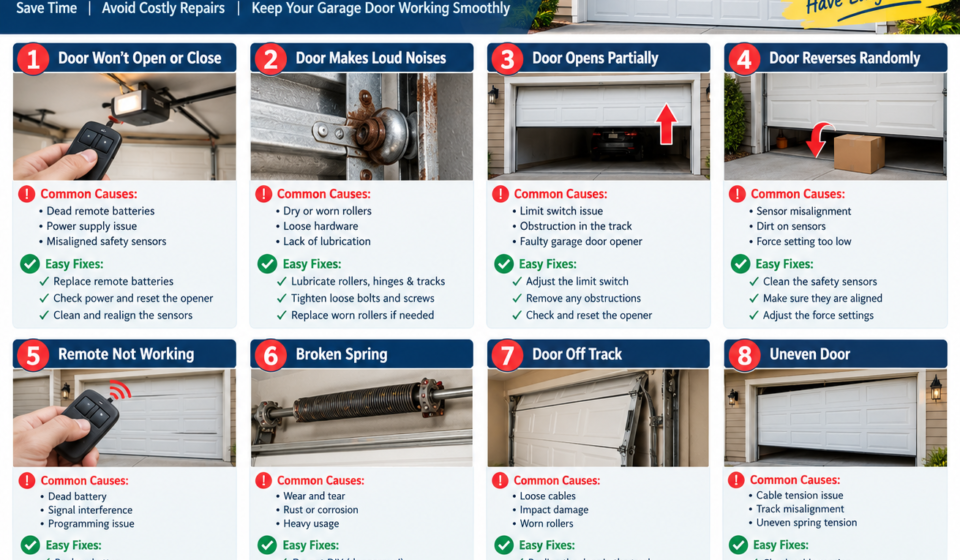
One of the most common garage door problems is a door that does not open when you press the remote or wall button. Start by checking whether the garage door opener has power. Make sure the opener is plugged in and check the circuit breaker if necessary.If the opener has power but the remote does not work, replace the remote batteries. You can also try operating the door from the wall-mounted control. If the wall control works but the remote does not, the issue may be related to the remote, its programming, or the opener’s receiver.Another common cause is a problem with the photo-eye safety sensors. These sensors are usually positioned near the bottom of the garage door tracks. If they are dirty, blocked, or misaligned, the opener may prevent the door from closing or operating correctly. Clean the sensor lenses and make sure both sensors are facing each other properly.
Garage Door Is Stuck Halfway
A garage door that stops halfway can have several causes. The tracks may be dirty or obstructed, rollers may be worn, or the door could be experiencing a balance problem. A properly balanced garage door should move smoothly without excessive resistance.If you disconnect the opener using the emergency release and the door feels extremely heavy or difficult to move manually, there may be a spring or balance issue. Avoid trying to adjust or replace the springs yourself because garage door springs store a large amount of energy.Professional garage door technicians can inspect the spring system, cables, rollers, and other components to determine why the door is stopping.
Garage Door Makes Loud or Strange Noises
Grinding, squeaking, rattling, or popping sounds should not be ignored. Different sounds can point to different problems. Squeaking may be caused by dry rollers, hinges, or other moving parts. Rattling can indicate loose hardware, while grinding may suggest worn rollers or problems with the tracks.Regular maintenance can reduce unnecessary noise. Hardware should be inspected for looseness, and appropriate garage door lubricant can be applied to compatible moving components. However, lubrication will not solve every mechanical problem. If the noise continues or becomes louder, a professional inspection may be necessary.
Garage Door Closes and Then Opens Again
If your garage door starts closing but immediately reverses, the safety sensors are one of the first things to check. Something blocking the sensor path can cause the door to reverse automatically.Check the area beneath the door and make sure there are no objects interfering with its movement. Clean the sensors and verify their alignment. If the door still reverses after these checks, the problem could involve the opener settings, sensor wiring, or another mechanical component.Never disable or bypass the safety sensors simply to make the door work. They are an important part of the garage door’s safety system.
Garage Door Is Uneven
An uneven garage door can indicate a problem with the springs, cables, tracks, or other components. You may notice one side of the door sitting higher than the other or the door becoming crooked while opening.This issue should not be ignored because continued operation can place additional stress on the opener and other parts. If the door appears unbalanced, stop using it until the cause can be properly identified.Experienced companies such as Apex Garage Doors and Gates can inspect the complete system and recommend the appropriate repair based on the condition of the door.
Garage Door Remote Is Not Working
A garage door remote that suddenly stops working may have a simple battery problem. Replace the batteries and test the remote again. If it still does not work, check whether the wall control operates the door.
If the wall control works normally, the remote may need to be reprogrammed or replaced. In some cases, interference or an issue with the opener receiver can also affect remote operation.
Keeping the remote away from excessive moisture and physical damage can help extend its useful life.
When You Should Call a Professional
Basic troubleshooting is useful for simple problems such as dead remote batteries, dirty safety sensors, or minor obstructions. However, certain problems require professional attention. Broken springs, snapped cables, damaged tracks, severely bent doors, electrical problems, and doors that are extremely heavy or unstable should not be treated as DIY projects.
A garage door can be surprisingly heavy, and its spring and cable systems can contain significant stored energy. Professional technicians have the tools and experience needed to diagnose these problems safely.
How Regular Maintenance Helps Prevent Problems
Regular garage door maintenance can help identify small problems before they become expensive repairs. Inspect the tracks and remove visible debris. Keep the sensor area clean and make sure the door opens and closes smoothly. Listen for unusual sounds and watch for changes in movement.
It is also useful to have the entire system professionally inspected periodically. A technician can examine springs, cables, rollers, hinges, tracks, opener components, and safety features that may not be obvious during a basic homeowner inspection.
Final Thoughts
Garage door troubleshooting does not always require complicated repairs. Simple checks such as testing the power supply, replacing remote batteries, cleaning safety sensors, and removing visible obstructions can solve some common problems. However, mechanical issues involving springs, cables, tracks, and serious balance problems require greater caution.
Knowing the difference between a simple troubleshooting step and a potentially dangerous repair can help protect both your property and your family. When your garage door shows signs of serious damage or continues to malfunction after basic checks, getting professional help is the safest approach.
Frequently Asked Questions
How do I troubleshoot a garage door that will not open?
Start by checking the opener’s power supply and circuit breaker. Then test the wall control and remote. Replace the remote batteries if needed and inspect the safety sensors for dirt, obstruction, or misalignment.
Why does my garage door stop halfway?
A garage door may stop halfway because of worn rollers, damaged tracks, an opener problem, or an issue with the spring and balance system. If the door feels unusually heavy when operated manually, professional inspection is recommended.
Why does my garage door make a loud noise?
Loud noises can result from worn rollers, loose hardware, dry moving parts, damaged tracks, or other mechanical issues. If lubrication and basic inspection do not resolve the noise, contact a qualified garage door technician.
Why does my garage door close and then go back up?
This commonly happens when the safety sensors detect an obstruction or are dirty or misaligned. Check the sensor lenses and the area between the sensors. If the problem continues, the opener or another component may need inspection.
Can I replace a garage door spring myself?
Garage door spring replacement is generally not a safe DIY repair. Springs can store substantial energy and may cause serious injury if handled incorrectly. It is safer to have spring repairs performed by a trained professional.
How often should a garage door be inspected?
A basic homeowner inspection can be performed regularly to identify visible problems, unusual noises, or changes in operation. Professional maintenance should also be considered periodically to check components such as springs, cables, rollers, tracks, and opener safety features.