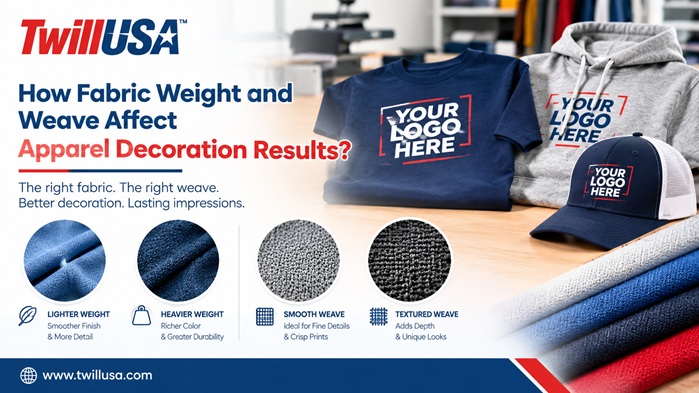

When creating custom apparel, the fabric does more than determine how a garment feels. Its weight, weave, texture, and structure also influence how decoration methods perform and how the finished design looks. Choosing the right material helps decorators achieve sharper details, better adhesion, and a more consistent finish. Whether working with American twill fabric or poly twill, understanding how fabric construction affects decoration can make the entire process more predictable.
Why Fabric Weight Matters in Apparel Decoration?
Fabric weight refers to how heavy or dense a material is. Lightweight fabrics often feel soft and flexible, while heavier fabrics generally provide a more substantial surface for decoration. The weight of the base material can influence how heat, pressure, and adhesives interact with the garment during application.
For example, a heavier fabric may provide greater stability when applying lettering, numbers, patches, or layered designs. A lighter material may require more attention to pressure and temperature settings to avoid distortion. American twill fabric is often considered when a structured surface is needed for decorative applications, while poly twill may suit projects that require a durable synthetic base.
Heavier Fabrics and Design Stability
Heavier fabrics can provide a stable foundation for appliqué and other dimensional decorations. Their structure may help reduce movement during pressing, making it easier to position larger designs accurately.
They can be particularly useful for:
- Team jerseys and uniforms
- Large appliqué designs
- Bold lettering and numbers
- Decorative patches
- Structured sportswear
However, fabric weight should always match the garment and decoration method. A heavier material is not automatically better for every application.
Lightweight Fabrics and Flexibility
Lightweight fabrics offer greater flexibility and are common in garments designed for movement. They can work well with lightweight heat transfer materials and smaller graphics, but decorators need to consider how the fabric responds to heat and pressure.
A decoration that works well on a sturdy American twill fabric surface may require different application considerations when used on a thinner garment. Similarly, poly twill can provide structure without necessarily making the finished garment feel excessively heavy.
How Weave Influences Decoration?
Fabric weave describes how individual yarns intersect to create the material’s structure. Different weave patterns affect smoothness, flexibility, thickness, and surface texture. These characteristics influence how decoration materials sit on the garment.
A tightly constructed weave can provide a relatively stable surface for lettering and graphics. A more textured or loosely constructed fabric may require greater attention to application settings because the decoration must conform to the surface.
The weave of American twill fabric gives it a distinctive diagonal texture that contributes to its appearance and structure. Poly twill also uses a twill construction, while its synthetic fiber content can provide properties suited to sportswear and performance-focused applications.
Surface Texture and Design Appearance
The surface of a fabric affects how a finished decoration appears. Smooth materials may allow fine details and sharp edges to stand out clearly. Textured materials can create a more dimensional or traditional appearance.
This becomes especially important when working with:
- Small lettering
- Detailed logos
- Fine outlines
- Multi-layer designs
- Reflective or metallic materials
Decorators should consider whether the decoration complements the texture rather than competing with it. The texture of American twill fabric can add visual depth to appliqué designs, while poly twill offers a structured surface that works well for many athletic apparel applications.
Matching Fabric Weight with Decoration Type
Different decoration techniques place different demands on the fabric. Heat transfer vinyl, tackle twill, appliqué, patches, and other materials may respond differently depending on the garment’s weight and construction.
For Appliqué and Tackle Twill
Structured fabrics can provide a strong foundation for layered decoration. When several materials are combined, fabric stability becomes particularly important because the garment needs to support additional weight.
American twill fabric can complement traditional appliqué applications where structure and visual definition are important. Poly twill can also be considered for sportswear projects where durability and a consistent surface are priorities.
For Heat Transfer Vinyl
Heat transfer vinyl relies on heat, pressure, and adhesive performance. The fabric needs to tolerate the recommended application conditions without excessive distortion or damage.
A decorator should always follow the manufacturer’s recommended temperature, pressure, and application time rather than relying solely on fabric weight. Testing the material before production can help identify potential issues.
For Patches and Layered Designs
Patches and layered graphics can add noticeable weight to a garment. A stable base fabric can help the decoration maintain its shape and placement during use.
This is particularly useful for uniforms that receive frequent washing and repeated wear. Both American twill fabric and poly twill can be relevant when selecting a base or decorative material for structured apparel applications.
The Role of Fiber Content
Fabric weight and weave are important, but fiber content also affects decoration results. Cotton, polyester, and blended fabrics can react differently to heat, pressure, and adhesives.
Polyester-based materials are widely used in athletic apparel because they combine durability with lightweight performance. When working with poly twill, decorators should consider the specific polyester construction and follow the application instructions for the selected decoration material.
Fiber content also matters when choosing American twill fabric for a project. Understanding the material composition helps decorators select suitable adhesives, transfer products, and application settings.
Key Factors to Check Before Decorating
Before beginning production, consider the complete fabric profile rather than focusing on one characteristic.
A practical checklist includes:
- Fabric weight: Determine whether the garment needs a lightweight or structured decoration surface.
- Weave: Examine whether the weave provides enough stability for the selected design.
- Fiber content: Check whether the material is cotton, polyester, or a blend.
- Surface texture: Consider how texture may affect fine details and adhesion.
- Decoration type: Match the fabric to the needs of vinyl, twill, appliqué, patches, or other materials.
- Heat tolerance: Follow the recommended application temperature for the garment and decoration.
- Pressure requirements: Use the appropriate pressure to achieve reliable adhesion without damaging the fabric.
- Testing: Perform a test application before moving into full production.
These considerations apply whether the project involves American twill fabric, poly twill, or another apparel material.
Why Testing Before Production Matters?
Even when two fabrics appear similar, they may respond differently during heat application. Small differences in weight, weave, fiber composition, and finish can affect the final result.
A sample test allows decorators to check adhesion, appearance, edge definition, and overall durability before applying the design to an entire production run. Testing American twill fabric and poly twill under the intended application conditions can help identify adjustments before they become costly production problems.
Creating Better Decoration Results Through Fabric Selection
Fabric selection should be part of the decoration process from the beginning. Instead of choosing a decoration first and trying to make it work on any garment, decorators can evaluate the fabric’s characteristics and select materials that complement its construction.
The right combination of fabric weight, weave, fiber content, and decoration creates a more balanced finished product. American twill fabric can bring structure and a distinctive surface to custom apparel, while poly twill offers a synthetic option that aligns well with many sportswear applications.
Conclusion
Successful apparel decoration starts with understanding the material underneath the design. Fabric weight, weave, fiber content, and surface texture all influence how a decoration looks and performs after application.
By evaluating these factors and testing materials before production, decorators can reduce application problems and achieve more consistent results. Choosing the right American twill fabric or poly twill for each project ultimately helps create apparel that looks polished while standing up to regular use.