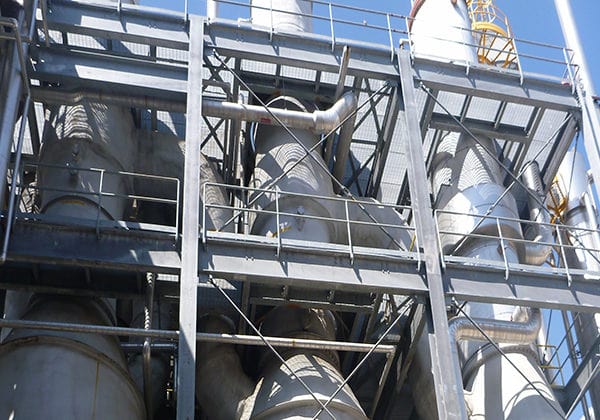

Choosing the right evaporation system often feels more complex than expected. Two technologies usually dominate the conversation, falling film units and forced circulation evaporators. Each supports industrial concentration processes in a very different way, and each fit in specific operating conditions. The real challenge lies in understanding how these systems behave once real fluids, heat loads, and production goals enter the picture. This comparison walks through their differences in a practical, grounded manner so decision making feels clearer and more confident.
Understanding Industrial Evaporation Systems
Evaporation plays a central role in chemical processing, food production, pharmaceutical manufacturing, and environmental treatment. The process removes solvent, most often water, to increase product concentration or recover valuable materials. Equipment selection directly shapes efficiency, product quality, and long-term operating stability.
Both forced circulation and falling film designs perform the same core task. Their internal mechanics, operating limits, and ideal use cases vary widely. Knowing how those differences show up in daily operation matters more than theoretical efficiency numbers.
What Defines Forced Circulation Evaporators?
Forced circulation evaporators rely on mechanical pumps to move liquid through the heat exchanger at high velocity. This constant motion keeps solids suspended and reduces the chance of localized overheating. Heat transfer occurs while liquid remains in motion rather than forming a thin film.
This design handles difficult process streams with confidence. Fluids with high viscosity, dissolved salts, or suspended solids remain stable under forced circulation. The system avoids hot spots that trigger fouling or premature crystallization inside tubes.
The recirculation loop also supports precise control over residence time, which becomes critical when downstream separation or a crystallizer enters the process line.
What Defines Falling Film Evaporators?
Falling film evaporators operate on a simpler principle. Liquid spreads into a thin film and flows downward across heated surfaces under gravity. Heat transfer occurs quickly because the film remains thin, allowing rapid evaporation at relatively low temperature differences.
This design suits clean, low viscosity liquids that spread evenly. Food and beverage concentration processes often benefit from falling film systems due to gentle heat exposure and short residence time. Product integrity stays intact when fluids behave predictably.
The simplicity of falling film units often translates into lower pumping energy and compact layouts, though process stability depends heavily on feed consistency.
Heat Transfer Behavior in Real Conditions
Heat transfer efficiency often drives initial equipment selection. Falling film evaporators deliver excellent heat transfer under ideal conditions. Thin films evaporate efficiently and respond quickly to load changes.
Forced circulation systems trade some efficiency for reliability. High liquid velocity improves heat transfer consistency across changing operating conditions. Fouling resistance increases because solids remain in suspension rather than settling.
When evaporation links directly to a crystallizer, forced circulation supports more stable supersaturation control, especially when crystal formation starts upstream of separation equipment.
Handling Solids, Viscosity, and Fouling
Process streams rarely behave politely. As concentration rises, viscosity increases and dissolved solids begin to precipitate. Falling film systems struggle once films lose uniformity. Dry patches form, heat transfer drops, and fouling risk increases.
Forced circulation evaporators thrive in these conditions. Pump driven flow prevents solids from settling and keeps tube surfaces clean. This advantage becomes decisive in zero liquid discharge systems, wastewater concentration, and salt recovery operations.
When crystallization occurs intentionally, stable circulation improves crystal growth control before material enters a dedicated crystallizer vessel.
Energy Use and Operating Efficiency
Energy efficiency often favors falling film designs at first glance. Lower pumping requirements reduce power consumption, especially for clean, low solids applications. Thermal efficiency remains high as long as film distribution stays uniform.
Forced circulation systems consume more mechanical energy due to pumping. That cost balances out through reduced downtime, fewer cleaning cycles, and consistent performance across wide operating ranges.
In processes where fouling leads to frequent shutdowns, energy savings from falling film units disappear quickly.
Process Control and Stability
Stable operation matters just as much as efficiency. Falling film evaporators respond quickly to feed fluctuations, though only within narrow limits. Variations in flow distribution disrupt film formation and affect evaporation rates.
Forced circulation provides robust control over temperature profiles, flow rates, and concentration levels. Operators gain flexibility during startup, shutdown, and load changes. This stability supports integration with downstream separation stages and crystallization loops.
When a crystallizer follows evaporation, precise concentration control upstream simplifies crystal size management and product consistency.
Maintenance and Operational Considerations
Maintenance demands differ sharply between the two designs. Falling film systems require careful cleaning routines to preserve film distribution. Fouling, once established, spreads quickly across heat transfer surfaces.
Forced circulation designs accept harsher cleaning protocols and tolerate abrasive slurries. Tube bundles remain accessible, and high velocity flow limits deposit buildup during normal operation.
Operational teams often favor forced circulation when process variability remains high or feed composition changes frequently.
Space, Layout, and Installation Factors
Falling film evaporators often feature compact vertical designs. Limited footprint and reduced structural load appeal to facilities with space constraints.
Forced circulation systems require additional piping, pumps, and support structures. Installation complexity increases, though modular designs help streamline integration.
Layout decisions often reflect long term expansion plans rather than immediate space savings.
Choosing the Right System for Your Process
Equipment selection rarely comes down to a single metric. Falling film evaporators suit clean, temperature sensitive products with stable feed properties. Their efficiency shines when operating conditions remain predictable.
Forced circulation evaporators support demanding applications where solids, viscosity, or crystallization play a role. Their reliability under stress often outweighs higher mechanical energy use.
Processes feeding into a crystallizer typically benefit from forced circulation upstream due to improved concentration control and solids handling.
The right choice aligns equipment behavior with real process challenges rather than ideal assumptions.
Role of Evaporation in Integrated Process Lines
Evaporation rarely functions as a standalone operation. In most industrial setups, it connects upstream preparation stages with downstream separation or finishing steps. When evaporation feeds directly into solid formation or concentration polishing, flow stability and consistency shape overall process success. Forced circulation evaporators offer predictable output concentrations, which simplifies coordination with subsequent equipment. This consistency reduces variability across the entire processing line and improves operational confidence.
Impact on Product Quality and Yield
Product quality depends on more than temperature control. Residence time, shear exposure, and concentration uniformity influence final characteristics. Falling film systems preserve sensitive products when feed conditions remain stable. When solids or impurities increase, performance shifts. Under such conditions, forced circulation evaporators maintain homogeneity and limit localized overheating. This behavior supports higher yield recovery, especially when crystal formation or controlled precipitation follows evaporation inside a crystallizer.
Scalability and Long-Term Process Flexibility
Processes evolve. Capacity increases, feed composition changes, and regulatory demands tighten. Equipment that adapts smoothly protects long term investment value. Forced circulation designs scale effectively across larger throughputs without sacrificing control. Their ability to accommodate broader operating windows proves valuable when future integration with a crystallizer or recovery system becomes necessary. Flexibility often defines sustainability in industrial processing environments.
Conclusion
Understanding the practical differences between falling film systems and forced circulation evaporators removes much of the uncertainty from equipment selection. Each technology serves a clear purpose within industrial evaporation. When solids handling, stability, and integration with a crystallizer matter most, forced circulation delivers dependable performance. When efficiency and gentle handling dominate priorities, falling film designs remain valuable. The smartest decisions emerge from matching process realities with equipment strengths rather than chasing theoretical efficiency alone.