
A power outage can interrupt many of the things households rely on every day, including refrigeration, lighting, internet access, communication, and essential medical equipment. For beginners, preparing for an outage does not have to mean finding a way to power every appliance in the home.
A good home emergency generator and outage guide starts with identifying essential devices and understanding a few basic specifications. Capacity, continuous output, peak output, recharge time, battery type, and available connections are among the most important factors to understand.
What Is a Home Emergency Generator?
A home emergency generator is a backup electricity source used when normal utility power is unavailable. Traditional generators typically use an engine and fuel, while portable power stations store electricity in a battery and provide power through built-in outlets and interfaces.
Battery-powered portable power stations can be useful for households that want portable backup for selected appliances and electronics. The appropriate choice depends on the size of the electrical loads and how long you expect an outage to last.
Start by Identifying Essential Devices
Beginners should first make a list of the equipment they need most during an outage.
Typical priorities can include:
- Refrigerators and freezers
- Wi-Fi routers and modems
- Phones and communication devices
- Essential lights
- Fans
- Laptops and computers
- CPAP machines and other compatible medical equipment
You do not necessarily need to run all these devices at the same time. Prioritizing essential loads can help conserve available energy during a longer outage.
Understand Watts and Watt-Hours
Two basic measurements can help you understand a portable power station: watts and watt-hours.
Watts (W) describe how much power a device requires or how much power a generator can deliver at a given moment.
Watt-hours (Wh) describe the amount of energy stored in a battery. A higher Wh rating generally means more stored energy, although actual runtime depends on the connected load.
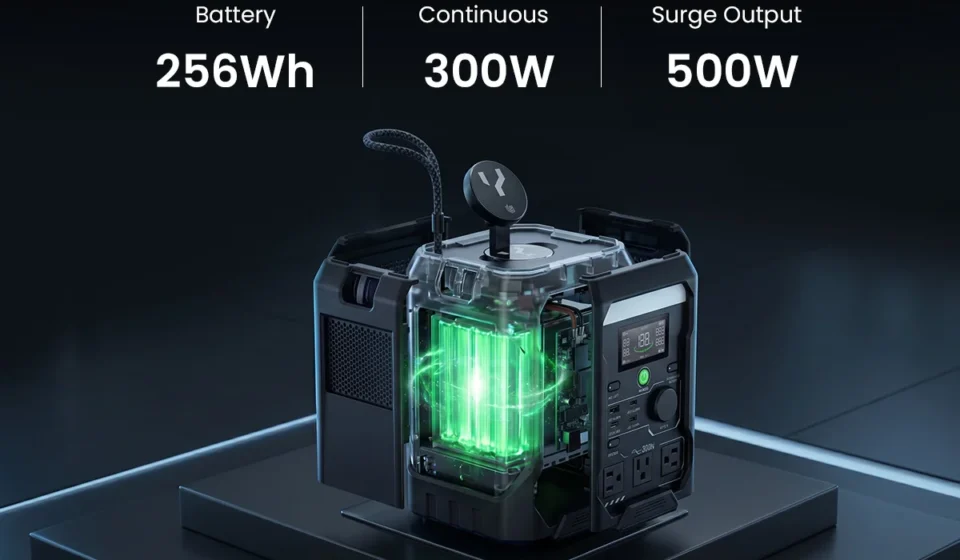
For example, the GEYOTO N300 has a 256Wh battery, while the N1000 has a 1,024Wh battery. The N1000 therefore stores substantially more energy, but the right choice depends on the devices you need to support.
Understand Continuous and Peak Output
A generator’s continuous output is the amount of power it can normally provide. Peak output refers to a higher level that may be available temporarily for startup demands.
This distinction matters because appliances with compressors or motors can require more power when starting than they consume during normal operation.
The N300 provides 300W continuous pure sine wave output and 500W peak output. The N1000 provides 1,800W continuous pure sine wave output and 3,000W peak output.
What Is Constant Power Mode?
Some portable power stations offer a Constant Power mode that can allow compatible equipment to operate at a higher power level than the standard continuous output.
The N300 provides a 550W Constant Power mode, while the N1000 provides a 2,400W Constant Power mode.
Constant Power does not increase the battery’s stored energy. Higher-power operation can consume the available energy more quickly, and the connected appliance must remain within the system’s supported operating conditions.
Choose the Right Battery Capacity
The appropriate battery capacity depends on the equipment you need to operate and the expected outage duration.
The GEYOTO N300 has a 256Wh capacity and is positioned as a compact “Grab and Go” solution. It is designed for camping, travel, small electronics, Wi-Fi routers, laptops, lighting, and short-term outage backup.
The GEYOTO N1000 has a 1,024Wh capacity and follows an “All-in-One: One Station. Fully Loaded.” positioning. It is designed for home emergencies, refrigerators, CPAP machines, fans, Wi-Fi equipment, RV trips, camping, and vehicle-support scenarios.
Consider Battery Technology
Both the N300 and N1000 use LiFePO4 batteries and have a specified battery life of 4,000 cycles.
Cycle life can be useful for understanding how a battery is designed to handle repeated charging and discharging. Actual service life varies according to factors such as temperature, charging practices, storage, operating conditions, and usage.
Following the manufacturer’s charging and storage recommendations is important for maintaining the equipment.
Check Recharge Time
Recharge speed can become especially important when outages happen frequently or when power is restored temporarily.
The N300 can fully recharge in about 1.5 hours.
The N1000 can charge from 0–80% in 43 minutes and reach 100% in 68 minutes.
A faster recharge can help prepare a backup system for another interruption sooner after utility service returns.
Look at the Available Ports
The number of ports affects how many devices you can connect and what types of equipment the system can support.
The N300 has nine output outlets and 25W wireless charging.
The N1000 has 18 total ports and interfaces, including 13 output ports, along with Qi2.2 25W wireless charging.
Before an outage, check which ports your essential equipment requires and make sure you have the appropriate cables.
Understand UPS Functionality
UPS, or uninterruptible power supply, functionality can help reduce interruptions when utility electricity fails.
This can be useful for compatible electronics such as Wi-Fi routers, computers, and other devices that may restart after losing power.
Both the N300 and N1000 have a specified UPS switching time of less than 10 milliseconds. Always check the requirements of your specific equipment before relying on UPS operation.
Consider Common Outage Uses
A portable power station can support different household needs depending on its output and capacity.
Refrigerators
Refrigerators can be an important priority during extended outages. Check both running and startup requirements to ensure they fall within the generator’s supported output.
Wi-Fi and Communication
Keeping a router, modem, and phones powered can help a household remain connected to work, family, and emergency information.
Lighting and Fans
Lights can provide basic visibility during an outage, while compatible fans can provide airflow when normal household power is unavailable.
Laptops
A backup power station can keep laptops charged for work, school, communication, or access to important information during an outage.
CPAP Machines
The N1000 is positioned for CPAP applications. Anyone relying on a backup system for medical equipment should verify the device’s electrical requirements and compatibility before an outage.
Think About Portability
Beginners should also consider where the generator will be used.
The N300 is designed around a compact “Grab and Go” approach, making it suitable for travel, camping, small electronics, and short-term home backup.
The N1000 offers greater capacity and output and can also be used for camping, RV trips, and compatible vehicle-support applications.
Vehicle-Support Capability
The N1000 includes an XT60 vehicle-support output rated at 12.6V/30A, with up to 378W of output for compatible vehicle-support applications.
This can be useful for people who want their portable power station to serve purposes beyond household emergency backup.
Create an Outage Priority Plan
Before an outage occurs, decide which appliances receive priority. This avoids wasting stored energy on nonessential equipment.
For example, refrigeration, communication devices, essential lighting, and compatible medical equipment may take priority over entertainment equipment or other optional loads.
If the outage continues, disconnect devices that are no longer necessary to preserve the remaining energy for higher-priority equipment.
Basic Safety for Emergency Power
Safety is essential when using any generator.
Fuel-powered generators produce exhaust gases and must be operated outdoors in an appropriate, well-ventilated location. Never operate an internal-combustion generator inside a home, garage, basement, or other enclosed area because of carbon monoxide risks.
Battery-powered portable power stations do not produce engine exhaust, but they should still be operated, charged, and stored according to the manufacturer’s instructions. Do not exceed rated output limits or use incompatible equipment.
Prepare Before the Next Outage
A backup system is most useful when it is ready before an emergency happens. Keep the power station charged according to recommended storage practices and keep necessary cables and adapters accessible.
It is also helpful to know the approximate wattage of your essential devices in advance. This makes it easier to decide what can safely be connected when the grid goes down.
Final Thoughts
For beginners, choosing an emergency generator starts with understanding actual household needs rather than simply selecting the biggest available system. Identify essential devices, check their power requirements, and compare those requirements with the generator’s capacity and output.
The GEYOTO N300 offers 256Wh of capacity for compact, portable applications, while the N1000 provides 1,024Wh and higher output for broader home emergency and outdoor uses. Comparing capacity, continuous and peak output, Constant Power, recharge speed, battery life, ports, UPS functionality, and portability can help you build a practical plan for future outages.