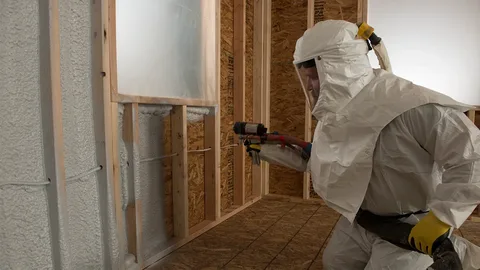
Installing residential spray foam insulation in Charlotte home setups relies on combining liquid polyurethane chemicals that expand instantly upon contact with building surfaces. When liquid ingredients mix in the applicator gun, they react rapidly to create a continuous expanded material that fills tight spaces, blocks air movement, and acts as a thermal boundary.
Building performance studies indicate that untamed air leakage accounts for up to 40 percent of a building’s heating and cooling energy loss. Spray foam creates an airtight barrier that stops this energy transfer, keeping indoor spaces stable during hot summer months and cold winter spells in the North Carolina Piedmont area.
Understanding how this product functions allows property owners to select building materials that protect structural framing while cutting monthly utility spending.
How Does Spray Foam Seal Structural Gaps in Residential Buildings?
Spray foam insulation begins as two liquid components, typically referred to as Side A and Side B. Side A contains isocyanates, while Side B contains a resin blend of polyols, catalysts, and blowing agents. High-pressure pumps send these fluids through heated hoses to an application gun where they blend under precise pressure.
Once applied to walls or attic roofs, the liquid expands within seconds up to 30 to 60 times its original liquid volume. As it expands, it enters small gaps, hidden framing joints, and electrical penetrations that standard batt materials miss completely.
The chemical reaction generates heat, turning liquid materials into a solid cellular structure within minutes. This tight seal prevents convective heat transfer and blocks airborne moisture from passing through building assemblies.
Comparing Open Cell and Closed Cell Foam Specifications
Residential construction projects generally use two primary forms of foam products. Each material offers distinct performance attributes based on density and cell composition.
Open cell foam features soft, flexible cells that remain unsealed. The trapped air within the cells provides insulating value while absorbing sound waves. It expands significantly, making it ideal for interior wall cavities and ceiling joists.
Closed cell material consists of dense, fully sealed microscopic pockets filled with blowing agents. This structure makes the product rigid and impermeable to water. It strengthens wall frames and stops water vapor from penetrating exterior boundaries.
| Performance Feature | Open Cell Foam | Closed Cell Foam |
|---|---|---|
| Average Density | 0.5 lbs per cubic foot | 2.0 lbs per cubic foot |
| Thermal Resistance (R-Value) | R-3.6 to R-3.8 per inch | R-6.0 to R-7.0 per inch |
| Moisture Resistance | Permeable to water vapor | Full vapor and water barrier |
| Structural Support | Minimal added strength | Adds strength to walls |
| Primary Application | Interior walls and attics | Exterior walls and subfloors |
Managing Local Climate Challenges with High-Performance Seals
The regional climate experiences humid summers and moderate winter temperatures. This damp climate poses specific challenges for residential building envelopes. High outdoor humidity forces wet air against exterior walls, leading to wood rot and mildew inside wall cavities.
Using spray foam insulation in charlotte nc residences helps regulate internal wall temperatures and keeps indoor humidity levels near the ideal 45 percent range. Stopping summer moisture before it enters the living space protects subfloors, ceiling joists, and drywall sheets.
Regional building data shows that local air conditioners operate up to 15 percent more efficiently when homes feature airtight thermal boundaries rather than fibrous venting systems. Choosing the residential spray foam insulation charlotte homeowners trust ensures that indoor conditioned air stays inside during extreme summer heatwaves.
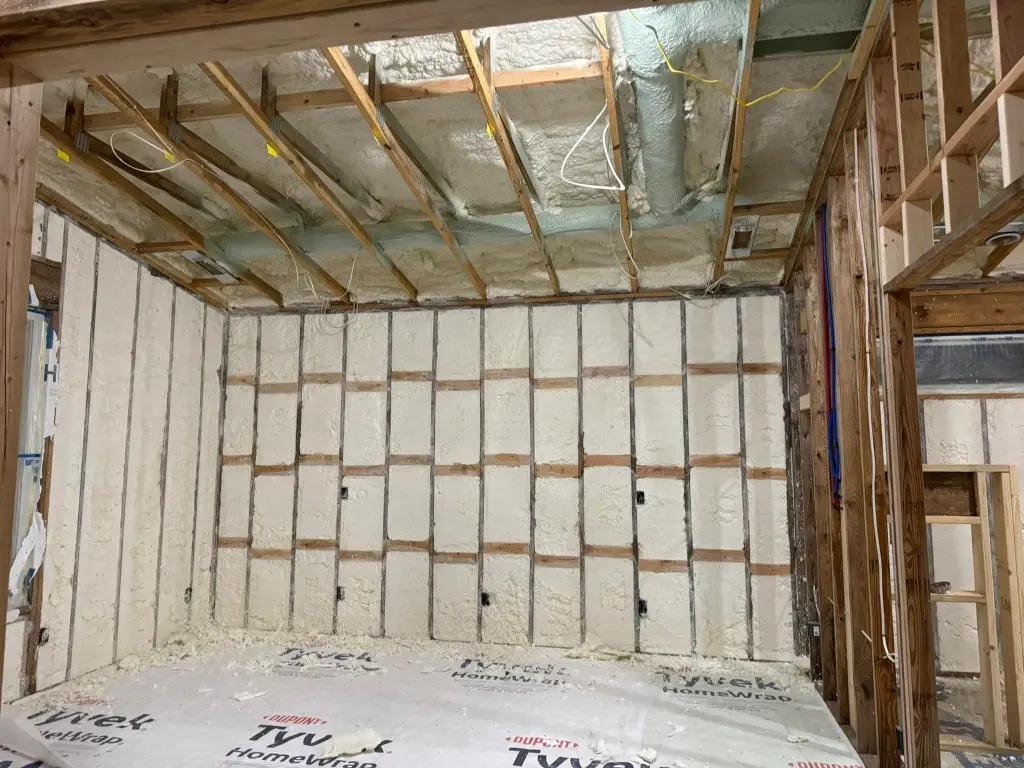
Targeting Key Home Areas for Spray Foam Application
Applying the foam insulation Charlotte, NC property owners select across key home areas stops conditioned air from leaking into the outdoors.
Attic Rafters and Roof Decks
Attics experience extreme temperature fluctuations, often rising past 130 degrees during summer months. Applying foam directly against the underside of the roof deck moves the insulation line up, creating a conditioned attic space for ductwork and stored items.
Crawl Spaces and Subfloors
Vented foundation spaces let ground moisture drift upward into subfloors and living spaces. Installing crawlspace spray foam Charlotte, NC applications seals foundation vents and perimeter walls, stopping damp soil gases from rising into living areas.
Exterior Wall Cavities
Framed walls contain numerous plumbing pipes, wire penetrations, and outlet boxes. Expanding foam seals around these obstructions completely, ending cold drafts near baseboards and wall switches.
Bonus Tip: Before insulating a crawl space, inspect the floor perimeter for groundwater drainage issues. Fixing leaks before spraying ensures long-term performance and prevents moisture from getting trapped beneath floor boards.
Things to Consider Before Installing Foam Insulation
Selecting the right insulation solution requires reviewing several structural and operational factors before work starts.
- Structural Framing Integrity: Wooden studs, roof rafters, and floor joists must be dry and free of rot before applying polyurethane material.
- Electrical Wiring Layout: Older wiring systems should be evaluated by an electrician to prevent heat buildup around high-voltage cables.
- Fresh Air Ventilation Needs: Airtight houses require controlled ventilation systems like ERVs or HRVs to refresh indoor air continuously.
- Existing Insulation Removal: Old fiberglass rolls or blown cellulose must be cleared out completely to allow the liquid foam to stick to structural surfaces.
Bonus Tip: Request a blow-door test from an energy assessor after installation. This test verifies that the home achieved target airtightness goals without over-tightening the indoor environment.
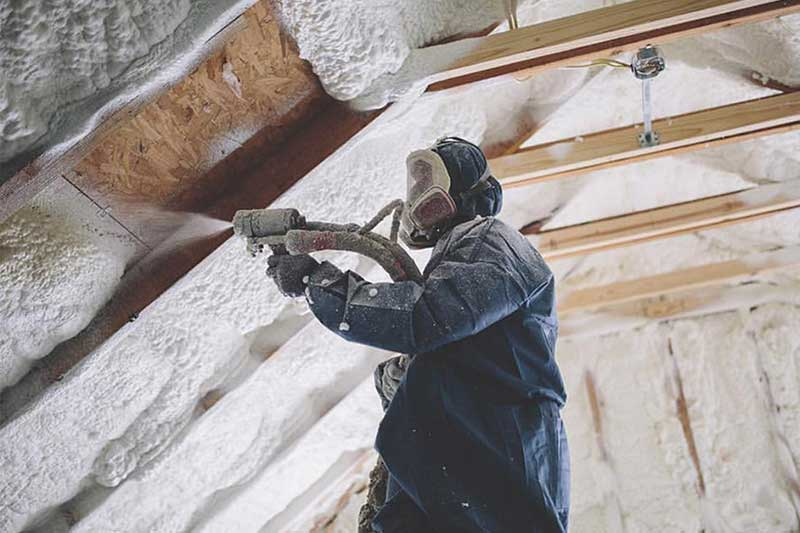
Reducing Energy Bills and Improving Building Efficiency
Unsealed building cracks let expensive indoor air escape while pulling unconditioned outdoor air into living spaces. This continuous airflow forces heating and air conditioning units to run continuously during peak weather seasons.
Properly applied expert spray foam insulation in Charlotte, NC, eliminates air movement through walls and ceilings.This complete thermal seal lightens the burden on HVAC systems, reducing mechanical wear and lowering monthly power bills by 20 to 30 percent over time.
Home utility tracking shows that proper energy upgrades often recoup initial installation costs through utility savings within five to seven years. When planning a home comfort upgrade, using the residential spray foam insulation Charlotte contractors install creates long-lasting efficiency for decades to come.
Evaluating Your Home Energy Upgrades
Before moving forward with an installation, it is highly beneficial to assess your current building envelope’s baseline condition. Measuring attic temperature variances, monitoring crawl space humidity levels, and evaluating seasonal energy spikes will help pinpoint exactly where your current boundaries are falling short.
Property owners should evaluate their current energy costs, indoor air dampness, and comfort goals before starting a thermal installation project. Investing in the residential spray foam insulation Charlotte structures require ensures stable indoor temperatures and lower utility expenses year-round.
Partnering with Qualified Insulation Specialists for Your Next Home Improvement Project
When you are ready to upgrade your home thermal boundary, consulting experienced professionals makes all the difference. Spray Foam Pro LLC & Fiberglass delivers comprehensive building envelope services tailored to your structural needs. Their experienced technicians evaluate your home layout and install high-performing materials that reduce utility costs while improving indoor comfort. You can reach out to their team today at sales@sprayfoamprollc.com or call (910) 606-6247 to discuss your project requirements and receive a free quote tailored to your property layout.
Frequently Asked Questions About Residential Spray Foam Insulation
How long does spray foam insulation last after application?
Spray foam insulation remains structurally sound for the lifetime of the building. It does not sag, settle, or degrade over time like traditional fibrous batts.
Does spray foam require special ventilation during installation?
Yes, technicians use safety equipment and exhaust fans during application. Homeowners typically need to stay clear of the building for 24 hours while chemicals cure completely.
Can spray foam prevent pest infestations in attics and crawl spaces?
Spray foam offers zero food value to insects or rodents. It hardens into a tight boundary that blocks pest entry routes through small foundation or roof cracks.
Is open cell foam better than closed cell foam for attic decks?
Both option types work well under roof decks. Open cell offers cost-effective thermal barrier coverage, while closed cell provides extra moisture resistance in highly humid environments.
Does spray foam insulation increase the structural strength of walls?
Closed cell foam adds structural strength to wall framing due to its dense 2.0-pound density. Open cell foam adds noise dampening but does not add structural framing strength.