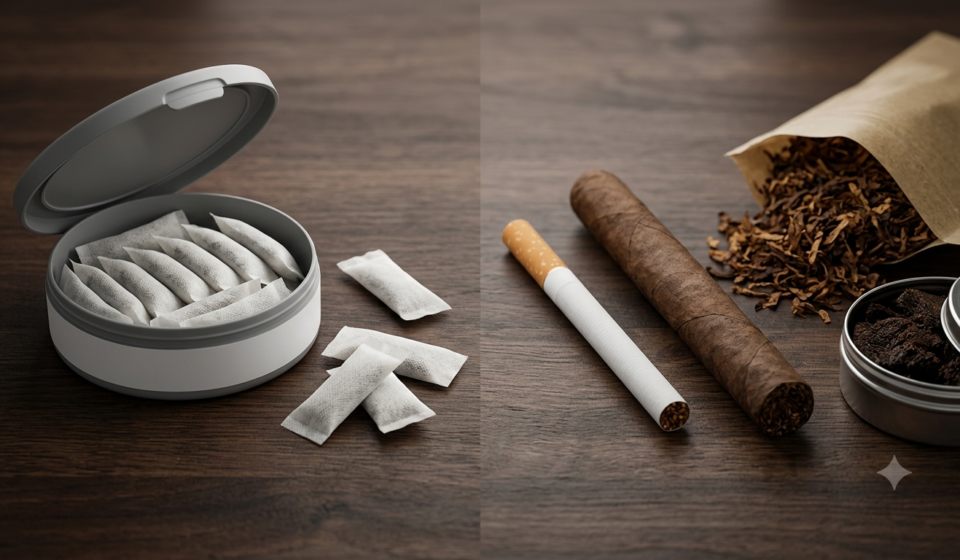

Nicotine products vary widely in their ingredients, delivery methods, health risks, convenience, and social impact. Understanding these differences helps adults evaluate claims without assuming any nicotine product is harmless.
Many adults compare Nicotine Pouches with cigarettes, cigars, chewing tobacco, snuff, or snus. The comparison requires separating combustible tobacco from oral tobacco, because their hazards differ considerably.
Pouches contain nicotine, flavourings, sweeteners, plant fibres, and other ingredients. They usually contain no tobacco leaf. Users place one between the lip and gum, where nicotine enters through oral tissues.
Traditional tobacco includes several product categories. Cigarettes, cigars, pipes, and hookahs burn tobacco. Chewing tobacco, moist snuff, and snus deliver nicotine without combustion.
This article compares how these products work, their relative risks, and their practical differences. It does not present any nicotine product as safe.
What Are Oral Nicotine Pouches?
Oral pouches are small, disposable packets designed for placement between the gum and upper lip. Their contents dissolve gradually during use.
The nicotine may come from tobacco plants or laboratory production. Chemically, tobacco-derived and synthetic nicotine remain very similar.
These products do not require lighting, inhaling, chewing, or spitting. They also produce no smoke, ash, or tobacco vapour.
However, they can contain substantial nicotine amounts. Strength varies between brands, product lines, and individual pouch sizes.
What Is Traditional Tobacco?
Traditional tobacco usually refers to products containing cured tobacco leaf. Some are smoked, while others remain inside the mouth.
Combustible products include cigarettes, cigars, pipes, and hookah tobacco. Burning creates smoke containing thousands of chemicals.
Smokeless tobacco includes chewing tobacco, dip, moist snuff, dry snuff, and snus. These products deliver nicotine without burning.
Although both categories contain tobacco, combustion changes the risk profile dramatically. Burned products generally create the greatest health burden.
The Main Difference: Tobacco Leaf and Combustion
The clearest difference involves tobacco leaf. Pouches generally contain nicotine but no actual leaf material.
Traditional products use cured tobacco leaves. Their chemical profile depends on growing, curing, fermentation, storage, and processing methods.
Combustible products add another major factor. Burning tobacco creates smoke, carbon monoxide, fine particles, and many toxic chemicals.
Therefore, cigarettes present risks beyond nicotine addiction. Their smoke damages the lungs, heart, blood vessels, and many other organs.
Pouches avoid combustion and smoke exposure. However, they still deliver addictive nicotine and may contain other harmful substances.
How Nicotine Delivery Differs
Cigarettes deliver nicotine to the brain very quickly. Rapid delivery reinforces repeated use and can strengthen dependence.
Cigars also deliver nicotine through oral tissues. Inhalation can increase exposure further, although non-inhaled smoke remains harmful.
Chewing tobacco, snuff, and snus release nicotine through the mouth. Their effects may develop more gradually than cigarette smoking.
Pouches use the same general oral route. Moisture activates the contents, allowing nicotine absorption through gums and oral lining.
The experience may feel slower and less immediate than smoking. Nevertheless, strong products can still deliver considerable nicotine.
Addiction Potential
Nicotine drives addiction across cigarettes, cigars, smokeless tobacco, and oral pouch products. It changes brain pathways and creates cravings.
Dependence can develop through repeated use. Users may experience irritability, restlessness, anxiety, concentration problems, or strong cravings during withdrawal.
A smoke-free format does not remove addiction risk. Discreet products may also support frequent use throughout the day.
That repeated exposure can maintain dependence. It may also make total nicotine intake difficult to estimate.
People who never use tobacco should not begin using oral nicotine products. Youth and young adults face particular developmental risks.
Health Risks of Cigarettes and Other Smoked Tobacco
Combustible tobacco is the most harmful tobacco category. Burning releases a toxic mixture containing thousands of chemicals.
Cigarette smoking is strongly linked with cancer, chronic lung disease, cardiovascular disease, stroke, and premature death.
Cigar and pipe smoke also contain toxic and cancer-causing substances. Avoiding inhalation does not eliminate exposure through the mouth.
Secondhand smoke affects nearby people. It also contaminates indoor air, clothing, furniture, and other surfaces.
Therefore, the absence of combustion represents an important difference. It does not automatically make alternative products harmless.
Health Risks of Traditional Smokeless Tobacco
Traditional smokeless tobacco avoids smoke but still carries serious risks. It contains nicotine and tobacco-specific toxicants.
The CDC states that smokeless tobacco causes cancers of the mouth, esophagus, and pancreas.
It can also contribute to gum disease, tooth decay, tooth loss, and potentially precancerous oral patches.
Some products contain tobacco-specific nitrosamines. Their levels vary according to curing, fermentation, ageing, and manufacturing.
Smokeless tobacco may also increase risks involving heart disease and stroke. Pregnancy use can harm fetal development.
Known and Unknown Risks of Oral Pouches
The long-term evidence for modern oral pouches remains limited. These products entered the United States market relatively recently.
Researchers still need stronger evidence about long-term oral, cardiovascular, reproductive, and cancer outcomes.
Known concerns include addiction, nicotine exposure, gum irritation, mouth discomfort, nausea, hiccups, dizziness, and increased heart rate.
Risk also depends on strength, frequency, duration, user health, and whether other nicotine products remain involved.
The FDA states that these pouches can generally present lower risk than cigarettes for adults who smoke. However, they remain risky.
Relative Risk Does Not Mean No Risk
Health comparisons require careful language. “Lower risk” never means “safe,” “healthy,” or “risk-free.”
Cigarettes usually sit at the highest-risk end because combustion creates extensive toxic exposure.
Traditional smokeless tobacco avoids smoke, but still exposes users to tobacco-related carcinogens and oral disease risks.
Modern oral pouches generally contain fewer harmful constituents than many traditional tobacco products. Yet product composition can vary.
Furthermore, FDA modified-risk decisions apply only to specifically reviewed products. They never cover every product within a category.
Complete Switching Versus Dual Use
An adult smoker may reduce harmful chemical exposure by switching completely away from cigarettes. Partial switching offers less benefit.
Continuing to smoke while also using pouches creates dual use. This pattern can preserve cigarette-related risks and nicotine dependence.
Some people use pouches where smoking is prohibited. They may then continue smoking at other times.
Consequently, convenience can increase total nicotine exposure rather than replace combustible tobacco use.
The FDA emphasises complete switching when discussing potential risk reduction for adults who already smoke.
Are They Approved for Quitting Smoking?
Oral pouch products are not FDA-approved smoking cessation medicines. Their marketing authorization does not make them medical treatments.
Approved cessation options include nicotine patches, gum, lozenges, certain prescription medicines, and behavioural support.
These treatments have established dosing instructions and evidence supporting cessation. Pouches do not share that therapeutic approval.
Adults seeking to quit should discuss proven options with a qualified healthcare professional. Combining medication and counselling can improve outcomes.
The healthiest objective remains ending all tobacco and nonmedical nicotine use.
Differences in Ingredients
Cigarettes contain processed tobacco, paper, additives, and filters. Burning creates additional chemicals not present before ignition.
Cigars contain fermented tobacco leaves in fillers, binders, and wrappers. Their size and nicotine content can vary considerably.
Chewing tobacco and snuff use processed leaf with moisture, salts, flavourings, and other additives.
Pouches usually contain nicotine, cellulose fibres, flavourings, sweeteners, stabilisers, and pH-adjusting ingredients.
Manufacturing quality and chemical content differ between products. Therefore, category labels cannot guarantee identical exposure.
Smoke, Smell, and Secondhand Exposure
Cigarettes, cigars, and pipes produce smoke, odour, ash, and environmental contamination. These effects influence users and bystanders.
Smokeless oral products produce no combustion smoke. Therefore, they do not create conventional secondhand smoke exposure.
Pouches are also less noticeable during use. They produce no ash and usually require no spitting.
However, discretion can create misuse concerns. Users may consume them in schools, workplaces, or other restricted settings.
Used products also contain residual nicotine. They require careful disposal away from children and animals.
Oral Health Considerations
Smoking affects oral health through heat, smoke, reduced healing, staining, gum disease, and cancer risks.
Traditional smokeless tobacco maintains direct contact with gum tissue. Repeated placement can damage specific areas.
Pouches also remain against oral tissues. Users may experience irritation, soreness, dryness, or local gum changes.
Long-term outcomes require further research. Rotating placement does not remove nicotine exposure or guarantee tissue protection.
Persistent sores, bleeding, colour changes, or unexplained lumps require professional dental or medical assessment.
Effects on the Heart and Circulation
Nicotine can raise heart rate and blood pressure. It can also increase cardiovascular workload.
Smoked tobacco adds carbon monoxide, particles, and many vascular toxins. Therefore, its cardiovascular impact extends beyond nicotine.
Traditional smokeless tobacco may also increase cardiovascular risks. Product type, dose, duration, and health history influence outcomes.
People with heart disease, uncontrolled hypertension, or rhythm disorders should seek medical guidance regarding nicotine exposure.
Chest pain, severe shortness of breath, fainting, or neurological symptoms require urgent medical attention.
Pregnancy, Youth, and Brain Development
Nicotine exposure is unsafe during pregnancy. It can harm fetal development and create risks for pregnant users.
Adolescent brain development continues into young adulthood. Nicotine can affect attention, learning, mood, and impulse control.
Young people may develop dependence quickly, even without daily use. Flavours and discreet packaging can increase appeal.
Therefore, youth should not use tobacco or oral nicotine products. Adults should store every product securely.
No relative-risk argument justifies nicotine initiation among nonusers, adolescents, or pregnant individuals.
Accidental Poisoning and Safe Storage
Small pouches can resemble sweets or gum containers. Children may touch, chew, or swallow them accidentally.
The FDA reports increasing exposure cases, with many involving children younger than five years.
Nicotine poisoning can cause vomiting, confusion, weakness, breathing problems, seizures, or loss of consciousness.
Store containers locked, elevated, and hidden from children and pets. Keep products inside their original child-resistant packaging.
Dispose of used pouches securely. Never leave them on tables, floors, car consoles, or open waste containers.
Convenience and Social Differences
Pouches require no lighter, ashtray, smoke break, or outdoor smoking area. They also create less visible disruption.
Traditional smoking involves lighting, smoke, odour, ash, and restrictions. It can affect clothing, breath, rooms, and vehicles.
Chewing tobacco may require spitting, depending on the product. Pouches generally avoid that requirement.
However, greater convenience can encourage continuous use. Users may take more frequent doses without noticing their pattern.
Therefore, convenience should not be confused with health protection or controlled consumption.
Cost and Consumption Patterns
Costs vary by country, taxes, brand, strength, and usage frequency. No category remains universally cheaper.
Cigarette users often follow predictable daily patterns. Pouch users may consume products across longer periods and more locations.
Higher-strength products may appear economical. However, they can increase nicotine exposure and dependence.
Dual use can also increase spending. Buying two product types rarely produces genuine savings.
Tracking daily units and spending can reveal patterns that casual estimates overlook.
Flavours and User Appeal
Traditional tobacco products may taste smoky, earthy, sweet, spicy, or fermented. Added flavours also appear in many markets.
Pouches often use mint, citrus, coffee, cinnamon, fruit, or other flavour profiles. These flavours can mask nicotine harshness.
Flavour does not reduce toxicity or addiction. Pleasant taste may encourage longer or more frequent use.
Youth-oriented flavour marketing remains a major public-health concern. Regulations differ between countries and local jurisdictions.
Consumers should never interpret attractive packaging as evidence of medical safety.
Environmental Impact
Cigarette waste includes filters, packaging, ash, and toxic litter. Discarded filters commonly persist in outdoor environments.
Cigar and pipe use also creates ash, wrappers, matches, and packaging waste.
Pouches avoid smoke and filters but still create plastic containers and used fibre packets.
Improper disposal can expose children, pets, and wildlife to nicotine. Containers should enter appropriate household waste systems.
No disposable nicotine product is environmentally neutral.
Which Option Is Less Harmful?
For adults who currently smoke, completely leaving cigarettes can reduce exposure to combustion-related toxicants.
Switching entirely to an authorized lower-risk product may reduce harm compared with continued cigarette smoking.
However, quitting all tobacco and nicotine delivers the greatest health benefit. Approved cessation treatments should remain the first-line approach.
For nonusers, the best option is starting neither product. There is no health advantage in beginning nicotine use.
For existing smokeless tobacco users, product-specific comparisons remain complex. Clinical guidance can support an individualized quitting strategy.
Practical Questions Before Making a Decision
Ask whether the goal involves quitting, complete switching, temporary substitution, or simple experimentation.
Next, consider current nicotine dependence, medical conditions, pregnancy status, age, and previous quit attempts.
Review whether the product has official authorization within your country. Authorization standards and legal requirements vary.
Avoid assuming every pouch has identical nicotine strength or chemical quality. Read packaging and official regulatory information carefully.
Most importantly, avoid dual use. Continuing cigarettes can preserve most combustion-related danger.
Frequently Asked Questions
Do Oral Pouches Contain Tobacco?
Most contain nicotine without tobacco leaf. The nicotine may be plant-derived or produced synthetically.
Are They Safer Than Cigarettes?
They generally expose users to fewer combustion toxicants than cigarettes. However, they remain addictive and are not risk-free.
Are They Safer Than Chewing Tobacco?
Some authorized products contain lower levels of many harmful constituents. However, evidence and composition vary by product.
Can They Help Someone Quit Smoking?
They are not FDA-approved cessation medicines. Approved medications and behavioural counselling have stronger therapeutic evidence.
Can Pouches Damage Gums?
They can cause irritation or discomfort at the placement site. Long-term oral effects remain under study.
Do They Cause Secondhand Smoke?
No combustion occurs, so they do not produce conventional secondhand smoke. They still require safe handling and disposal.
Can Someone Become Addicted?
Yes. Nicotine is highly addictive regardless of whether it arrives through smoke or oral absorption.
Conclusion
The central difference involves combustion, tobacco leaf, and chemical exposure. Cigarettes create the most dangerous toxic mixture.
Traditional smokeless tobacco avoids smoke but causes addiction, oral disease, and several cancers.
Modern oral pouches generally reduce exposure to many combustion-related chemicals. Nevertheless, they still carry addiction and health risks.
Long-term evidence also remains incomplete. Product strengths, ingredients, and regulatory status can vary significantly.
Adults who smoke gain the greatest health benefit by quitting completely. Nonusers should avoid starting any nicotine product.