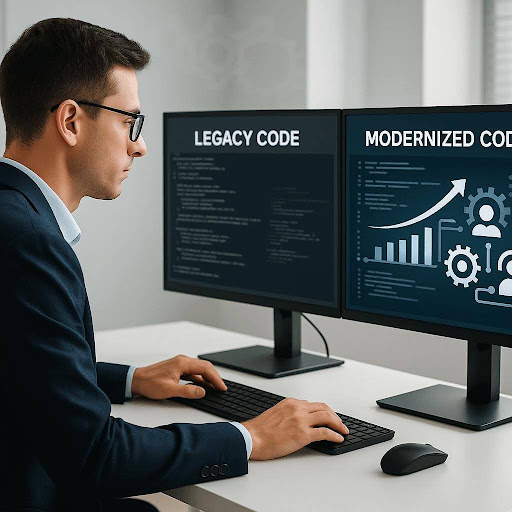
How Enterprise Application Modernization and Data Engineering Services Drive Digital Transformation

Organizations today face mounting pressure to innovate faster, improve operational efficiency, and deliver exceptional customer experiences. However, many enterprises still rely on legacy systems that were built years—or even decades—ago. While these applications may continue to support critical business processes, they often lack the flexibility, scalability, and performance needed to compete in an increasingly digital world.
At the same time, businesses generate unprecedented volumes of data from customers, operations, connected devices, and digital platforms. Turning that data into meaningful insights requires a robust and scalable foundation. This is where enterprise application modernization and data engineering services come together to create a powerful engine for digital transformation.
Organizations that successfully modernize their application landscape while investing in advanced data capabilities are better positioned to innovate, optimize operations, and respond quickly to evolving market demands.
The Growing Need for Digital Transformation
Digital transformation is no longer optional. Companies across industries are embracing cloud technologies, artificial intelligence, automation, and analytics to improve business performance and remain competitive.
However, many organizations encounter obstacles such as:
- Aging legacy applications
- Data silos across departments
- Limited scalability
- High maintenance costs
- Slow deployment cycles
- Inconsistent customer experiences
- Security and compliance challenges
Addressing these challenges requires a strategic approach that combines enterprise application modernization with comprehensive data engineering services.
Together, these capabilities enable businesses to create agile, connected, and data-driven ecosystems that support long-term growth.
Understanding Enterprise Application Modernization
Enterprise application modernization refers to the process of upgrading legacy systems, applications, and infrastructure to meet modern business requirements. Rather than replacing every existing system, organizations adopt modernization strategies that improve performance, enhance scalability, and reduce technical debt.
Modernization initiatives often include:
- Cloud migration
- Microservices architecture
- API integration
- Application reengineering
- User experience enhancements
- Containerization
- DevOps implementation
- Infrastructure optimization
By investing in enterprise application modernization, businesses can transform outdated technology stacks into flexible platforms capable of supporting innovation.
Why Legacy Systems Create Business Challenges
Many enterprises continue to rely on applications that were designed for a different technological era. Although these systems may still perform core functions, they often introduce limitations that hinder growth.
Common issues include:
Limited Scalability
Legacy systems struggle to accommodate increasing workloads and changing business requirements.
High Maintenance Costs
Older applications require ongoing maintenance and specialized expertise, increasing operational expenses.
Integration Difficulties
Disconnected systems create data silos that reduce visibility and collaboration.
Security Risks
Outdated infrastructure may expose organizations to compliance and cybersecurity challenges.
Slower Innovation
Rigid architectures make it difficult to deploy new features and respond to market opportunities.
Enterprise application modernization addresses these issues by enabling organizations to adopt more flexible, cloud-native architectures.
The Role of Data Engineering Services in Modern Enterprises
While modern applications improve agility and efficiency, businesses also need reliable data infrastructure to support analytics and decision-making. This is where data engineering services play a critical role.
Data engineering services focus on designing, building, and maintaining systems that collect, process, and distribute data across the organization. These services ensure that data is accurate, accessible, and ready for analytics, artificial intelligence, and operational reporting.
Core capabilities include:
- Data integration
- ETL and ELT pipelines
- Data warehousing
- Data lakes
- Real-time data processing
- Cloud migration
- Data governance
- Analytics enablement
Organizations investing in data engineering services create a strong foundation for data-driven innovation.
How Enterprise Application Modernization and Data Engineering Services Work Together
Modernization and data initiatives are deeply interconnected. Upgrading applications without addressing underlying data challenges can limit business value. Similarly, investing in analytics without modern infrastructure may result in performance bottlenecks.
By combining enterprise application modernization and data engineering services, businesses can achieve several key objectives.
Unified Data Ecosystems
Modern applications integrated with advanced data platforms eliminate silos and improve collaboration across departments.
Faster Decision-Making
Real-time data pipelines provide timely insights that support strategic planning.
Improved Customer Experiences
Integrated systems enable organizations to deliver personalized and consistent interactions.
Enhanced Operational Efficiency
Automation reduces manual tasks and streamlines workflows.
Greater Business Agility
Cloud-native architectures allow businesses to adapt quickly to changing market conditions.
Together, enterprise application modernization and data engineering services create a scalable framework for growth.
Cloud Adoption Accelerates Transformation
Cloud technologies have fundamentally changed how organizations develop, deploy, and manage applications and data platforms.
Cloud-enabled enterprise application modernization offers benefits such as:
- Flexible infrastructure
- Reduced operational costs
- Improved scalability
- Faster deployment cycles
- Enhanced disaster recovery
- Global accessibility
At the same time, cloud-based data engineering services support:
- Real-time analytics
- Distributed data processing
- Advanced machine learning
- Cost optimization
- Simplified infrastructure management
Cloud platforms enable organizations to modernize systems while unlocking the full value of enterprise data.
Data Pipelines: The Backbone of Modern Analytics
One of the most important aspects of data engineering services is pipeline development. Data pipelines automate the movement of information between systems, ensuring that business users always have access to accurate and timely insights.
Common pipeline capabilities include:
- Batch processing
- Real-time streaming
- API integrations
- Data transformation
- Data cleansing
- Workflow orchestration
Reliable pipelines improve operational visibility and help organizations maximize the impact of analytics initiatives.
As businesses continue investing in artificial intelligence and predictive analytics, scalable data engineering services become increasingly essential.
The Rise of API-Driven Architectures
Modern organizations depend on numerous applications, including customer relationship management systems, e-commerce platforms, financial software, and analytics tools.
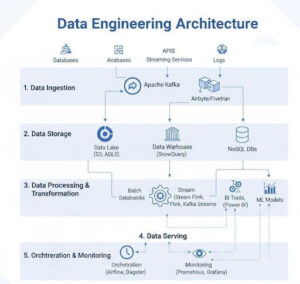
API-first strategies have become a cornerstone of enterprise application modernization, enabling systems to communicate seamlessly.
API-driven architectures provide:
- Faster integration
- Better scalability
- Improved flexibility
- Enhanced user experiences
- Simplified maintenance
Combined with robust data engineering services, APIs create connected ecosystems that support innovation and operational efficiency.
Artificial Intelligence and Automation
Artificial intelligence is reshaping how organizations manage applications and data.
AI-powered enterprise application modernization initiatives help businesses:
- Automate testing
- Optimize performance
- Predict infrastructure issues
- Improve user experiences
Similarly, AI-driven data engineering services support:
- Intelligent data processing
- Automated quality checks
- Predictive analytics
- Machine learning pipelines
Organizations that integrate AI into their modernization and data strategies gain a significant competitive advantage.
Industry Applications
The combined power of enterprise application modernization and data engineering services delivers measurable value across industries.
Retail
Retailers modernize commerce platforms while leveraging data to personalize customer experiences and optimize inventory.
Financial Services
Banks upgrade legacy systems and use analytics to improve fraud detection and customer engagement.
Healthcare
Healthcare providers modernize patient management systems and implement data platforms that support better outcomes.
Manufacturing
Manufacturers adopt cloud-native applications and real-time analytics to improve operational efficiency.
Technology
Technology companies rely on modern architectures and advanced data engineering to accelerate innovation.
Across sectors, organizations are recognizing that digital transformation requires both application modernization and scalable data infrastructure.
Best Practices for Successful Implementation
Businesses embarking on modernization journeys should follow several key principles.
Define Business Objectives
Technology investments should align with measurable business outcomes.
Prioritize Scalability
Applications and data platforms must support future growth.
Eliminate Data Silos
Integrated ecosystems improve visibility and decision-making.
Strengthen Security
Modernization efforts should incorporate governance and compliance requirements.
Invest in Automation
Automation accelerates deployments and reduces operational complexity.
Continuously Optimize
Digital transformation is an ongoing process that requires regular evaluation.
Organizations that approach enterprise application modernization and data engineering services strategically are more likely to achieve sustainable success.
Looking Ahead
As technology continues to evolve, enterprises must rethink how applications and data systems support business objectives. Emerging trends such as artificial intelligence, machine learning, edge computing, and hyperautomation will further increase the demand for modern, scalable infrastructures.
Future-ready organizations will continue investing in enterprise application modernization to improve agility while expanding data engineering services to unlock deeper insights and smarter decision-making.
Businesses that embrace these technologies today will be better prepared to navigate tomorrow’s challenges.
Conclusion
Digital transformation requires more than adopting new technologies—it demands a comprehensive strategy that modernizes applications and empowers data-driven decision-making.
By investing in enterprise application modernization, organizations can replace outdated systems with flexible, scalable architectures that support innovation. At the same time, advanced data engineering services provide the infrastructure needed to manage, analyze, and leverage enterprise data effectively.
Together, these capabilities create a strong foundation for operational excellence, customer satisfaction, and long-term business growth in an increasingly digital world.