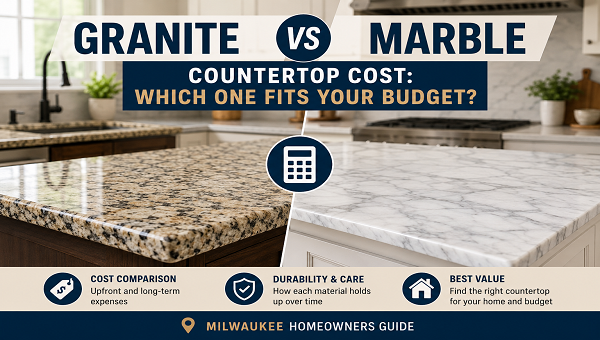

When I plan a kitchen or bathroom upgrade, countertops often take up a large part of my budget. Granite and marble both offer natural beauty, unique patterns, and long-term appeal. However, they do not always come with the same price or care needs. Therefore, I compare more than appearance before choosing between them.
At first, granite may seem like the more practical option. It comes in many colors, handles everyday kitchen use well, and often fits a wider range of budgets. Marble, on the other hand, offers soft veining and a classic appearance. However, it usually needs more careful cleaning and protection.
When I research the cost of granite countertops, I never look at the slab price alone. Instead, I also consider measuring, cutting, sink openings, edge work, delivery, installation, and sealing. As a result, I get a much clearer idea of what the complete project may cost.
For homeowners in Milwaukee, both stones can be suitable choices. However, the best option depends on the room, the amount of daily use, and the available budget. Therefore, I focus on total value instead of choosing the stone with the lowest starting price.
Key Takeaways
- Granite often costs less overall because it offers more affordable colors and usually needs fewer cosmetic repairs.
- Marble may cost more over time because it can require careful cleaning, polishing, and protection from acidic spills.
- The right choice depends on the room, since granite often suits busy kitchens while marble works well in quieter or decorative spaces.
The Main Cost Difference Between Granite and Marble
Granite and marble prices can vary widely. Therefore, general price ranges should only guide my starting budget. The final price will depend on the stone variety, slab size, thickness, finish, and installation details.
Granite often offers more choices in the lower and middle price ranges. Common granite colors may cost less because suppliers can source them more easily. However, rare granite with bold patterns, unusual colors, or limited availability can cost much more.
Marble also comes in several price levels. For example, Carrara marble may be more affordable than Calacatta or Statuario marble. Meanwhile, imported marble with bold veining and a bright white background may sit at the higher end of the market.
Therefore, I do not assume that every granite slab will cost less than every marble slab. A rare granite may cost more than a common marble. Still, when I compare standard options with similar finishes and thicknesses, granite often gives me more room to control the budget.
What Affects the Price of Granite Countertops?
Several details can raise or lower the price of granite. First, the color and pattern play an important role. Common black, gray, beige, and brown granite options may cost less. In contrast, blue, red, green, or highly patterned slabs may carry a higher price.
In addition, the stone’s origin can affect the cost. Imported granite may include added shipping, storage, and handling expenses. Therefore, two slabs with a similar appearance may still have different prices.
The thickness of the slab also matters. Thicker granite uses more material and weighs more. As a result, it may cost more to buy, move, and install.
Moreover, the surface finish can change the final price. A polished finish remains common and may come with standard pricing. However, honed, leathered, or textured surfaces often require additional work.
I also consider these granite cost factors:
- Slab color and movement
- Stone rarity
- Slab thickness
- Surface finish
- Number of slabs
- Edge profile
- Sink and cooktop cutouts
- Delivery distance
- Installation difficulty
Because of these details, two granite projects with the same square footage can have very different final prices.
What Affects the Price of Marble Countertops?
Marble pricing depends heavily on the stone variety, country of origin, color, and veining. Some types remain easier to source, while others come from limited quarries. Therefore, rarity often raises the price.
Carrara marble usually has soft gray veins and a light background. Since it is more widely available, it may sit in a more manageable price range. Calacatta marble, however, often has a brighter background and stronger veins. As a result, it can cost much more.
Marble may also require more careful fabrication. Since it is softer than granite, fabricators must handle narrow areas, sink openings, and detailed edges with care. Therefore, complicated designs can increase labor charges.
Vein matching can raise the cost as well. If I want the pattern to continue across seams, a backsplash, or a waterfall edge, the fabricator may need to use more material. Consequently, some parts of the slab may not fit into the final design.
The cost of marble countertop projects may rise further when I choose rare stone, detailed edge work, or a design that needs exact vein alignment. Therefore, I always ask how much material the final layout will require.
Why the Slab Price Does Not Tell the Full Story
It can be tempting to compare granite and marble only by the price per square foot. However, that number may not include fabrication, delivery, installation, or additional services.
Fabrication usually forms a major part of the final bill. During this stage, the fabricator measures, cuts, shapes, polishes, and prepares the stone. Therefore, a straight countertop with one sink opening will often cost less than a curved layout with several cutouts.
Installation also adds to the total. Natural stone slabs are heavy, so installers need the right equipment and experience. In addition, they may need to level the cabinets, join seams, secure the stone, and seal the surface.
A complete quote may include:
- In-home measurements
- Digital or physical templates
- The stone slab
- Fabrication
- Edge polishing
- Sink openings
- Cooktop cutouts
- Faucet holes
- Delivery
- Installation
- Sealing
- Old countertop removal
Therefore, I always ask for an itemized estimate. This makes it easier to see what the quote includes and which services may cost extra.
How Kitchen Size Changes the Final Cost
The size of the countertop area directly affects the total price. A small kitchen may need only 30 to 40 square feet of material. However, a larger kitchen with an island may require 60, 70, or even more square feet.
Still, square footage does not tell the complete story. Granite and marble are sold in slabs, and every countertop piece must fit within the chosen slabs. Therefore, I may need to buy two slabs even when my kitchen uses only part of the second one.
Large islands can also raise the cost. If I want one seamless piece, I need a slab that is wide and long enough. However, oversized slabs may cost more and require extra workers during installation.
Marble can create another challenge because of its veining. If I want all veins to run in the same direction, the fabricator may need to avoid certain sections. As a result, more material may go unused.
Granite patterns can sometimes make seams less noticeable. Therefore, granite may offer more flexibility for large or unusual kitchen layouts.
Edge Styles and Their Effect on Price
The countertop edge may look like a small detail. However, it can change the fabrication cost.
A simple eased or straight edge usually costs less because it needs less shaping and polishing. Therefore, it is a smart choice when I want a clean look without increasing my budget.
More decorative edges require extra labor. For example, ogee, bullnose, waterfall, and stacked edges may cost more. In addition, some designs need thicker stone or laminated pieces.
Granite can support many edge styles because it is strong. Marble can also look beautiful with decorative edges. However, fabricators must handle detailed marble edges carefully to reduce the chance of chips.
Therefore, I usually choose a simple edge when practical value matters more than decorative detail.
Sink Openings and Appliance Cutouts
Sink and appliance openings can also affect the project price. An undermount sink needs a clean, polished edge because the stone around the opening remains visible. As a result, it usually costs more to fabricate than a basic drop-in sink opening.
Cooktops require accurate cutting as well. In addition, faucets, soap dispensers, water filters, and electrical outlets may need separate holes.
A simple kitchen with one sink and one faucet can keep fabrication costs lower. However, a larger kitchen with two sinks, a cooktop, and several fixture holes will cost more.
Marble may need added care around narrow stone sections. Therefore, a complicated layout with many cutouts may increase both labor and material risk.
Granite Maintenance Costs Over Time
Granite usually comes with manageable maintenance costs. However, I still need to clean and protect it properly.
Many granite countertops need sealing. The schedule depends on the stone and the type of sealer. Some slabs may need sealing every year, while others may stay protected for longer.
Fortunately, sealing usually does not require a large budget. I may apply a suitable stone sealer myself. However, I can also hire a professional for deep cleaning and sealing.
For everyday care, I use mild soap, warm water, or a cleaner made for natural stone. In addition, I avoid harsh chemicals that could damage the sealer.
Granite also handles normal scratches and heat better than many softer materials. Still, I use cutting boards and trivets. Therefore, I protect both the countertop and my kitchen tools.
Because granite performs well in busy spaces, I may spend less on repairs and polishing over the years.
Marble Maintenance Costs Over Time
Marble usually needs more careful maintenance. Although sealing can help protect it from stains, it cannot stop etching.
Etching happens when acidic liquids react with the stone. For example, lemon juice, vinegar, wine, coffee, tomato sauce, and some cleaners can leave dull marks.
Therefore, I wipe up spills quickly. I also use coasters, trays, and cutting boards in areas where acidic food and drinks are common.
Marble can also scratch more easily than granite. As a result, a busy kitchen may show signs of wear sooner.
Professional polishing can reduce dull spots and light scratches. However, this service adds to the long-term cost. Therefore, I think carefully about whether I can accept the natural aging of marble.
Some homeowners enjoy the patina that marble develops. On the other hand, people who want a perfect surface may find every small mark frustrating.
Which Material Works Better in a Busy Kitchen?
For a busy kitchen, I usually see granite as the more practical financial choice. It handles regular cooking, family meals, and daily cleaning well. Therefore, it often needs fewer cosmetic repairs.
Granite also comes in many colors and patterns. As a result, I can often find a slab that matches my cabinets, walls, and flooring without choosing a premium variety.
Marble can still work in a kitchen. However, I need to accept that it may develop scratches, stains, or etched areas over time. If I often cook with lemon, vinegar, tomatoes, or wine, the surface may show wear.
Therefore, I may use marble in a smaller area instead of covering the entire kitchen. For example, a marble baking station can offer a cool surface for preparing dough. Meanwhile, granite can cover the sink and cooking areas.
This mixed approach can give me the appearance of marble while keeping the busiest surfaces easier to maintain.
Which Material Works Better in a Bathroom?
Bathrooms usually have less food-related acid and less heavy use than kitchens. Therefore, marble can work very well on a bathroom vanity.
Marble can make the room feel bright, clean, and elegant. In addition, a small vanity may need only a remnant. As a result, I may be able to use premium marble without buying a full slab.
Granite also works well in bathrooms. When properly sealed, it handles water, cosmetics, and regular use with fewer concerns.
For a busy family bathroom, I may prefer granite because it requires less careful treatment. However, for a guest bathroom or primary suite, marble may provide the softer look I want.
Practical Ways to Save Money on Granite
Granite gives me several ways to lower the cost without giving up natural stone.
First, I can choose a common color. Black, gray, beige, brown, and some white granite varieties often cost less than rare colors.
Next, I can select a standard polished finish. Special finishes may look attractive, but they often involve more labor.
I can also choose a simple edge. An eased edge looks neat and usually costs less than a decorative design.
Other ways to save include:
- Using a remnant for a small project
- Keeping the layout simple
- Reducing the number of cutouts
- Choosing a standard slab thickness
- Avoiding waterfall edges
- Reusing a suitable sink
- Comparing complete installation quotes
For a small project in Milwaukee, a remnant may provide strong value. Therefore, I ask local fabricators whether they have leftover pieces that fit my measurements.
Practical Ways to Save Money on Marble
Marble can also fit a controlled budget when I make careful choices.
First, I can choose Carrara instead of a rarer variety. Although every slab is unique, Carrara often gives me the classic marble look at a more manageable price.
In addition, I can use marble in one feature area. A bathroom vanity, fireplace surround, or baking station needs much less material than a full kitchen.
I can also accept natural patina. If I do not expect the surface to remain perfect, I may avoid frequent polishing expenses.
Simple edges and standard finishes can also lower the price. Therefore, I let the natural veining become the main design feature instead of paying for complex fabrication.
Granite and Marble Resale Value
Both granite and marble can make a home more appealing. However, resale value depends on the quality of the installation, the overall design, and the condition of the countertops.
Granite often appeals to buyers who want durability and simple care. Therefore, it may attract a wider group of homeowners.
Marble may appeal to buyers who value luxury and classic design. However, visible stains, scratches, and etching may reduce its appeal.
For that reason, I think about future buyers as well as my own style. A well-installed granite countertop may offer better value in a family home. Meanwhile, marble may add more visual impact in a luxury or design-focused property.
Questions I Ask Before Choosing a Countertop
Before selecting granite or marble, I ask the fabricator several practical questions:
- Does the quote include the full slab?
- How many slabs will the project require?
- Are measurements and templates included?
- What does each sink or cooktop cutout cost?
- Which edge styles are included in the base price?
- Does the quote include delivery and installation?
- Will the surface need sealing?
- Is old countertop removal included?
- How many seams will the finished countertop have?
- Does the installer offer a workmanship warranty?
These questions help me avoid surprise fees. Moreover, they allow me to compare quotes fairly.
Final Thoughts
Granite usually fits my budget better when I need a strong countertop for a busy kitchen. It offers more affordable choices, handles daily use well, and often needs fewer repairs. Therefore, it can provide a lower total cost over time.
Marble may fit my budget when appearance matters more than easy care. It works especially well in a bathroom, guest space, fireplace area, or small baking station. However, I need to include possible polishing and repair costs in my long-term plan.
For many Milwaukee homeowners, granite offers the best balance of price, beauty, and daily performance. Still, marble may be worth the added cost when its soft veining becomes an important part of the room’s design.
Ultimately, I choose granite when durability, easy care, and predictable costs matter most. On the other hand, I choose marble when I value classic beauty and can accept its changing surface. By comparing the complete project cost not only the slab price I can choose a countertop that fits my home, lifestyle, and budget.