
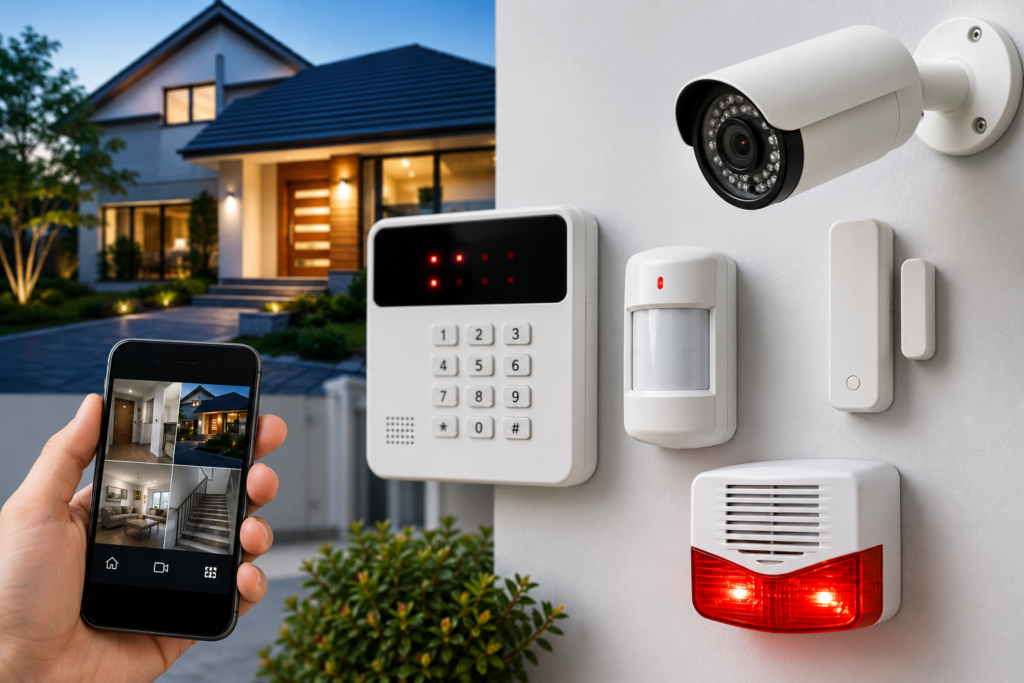
Security is one of the most valuable investments for any property owner. Whether it is a residential home, office, retail store, warehouse, educational institution, or industrial facility, protecting people and assets has become a top priority. Modern security threats continue to evolve, making traditional locks and basic surveillance insufficient for comprehensive protection. Businesses and homeowners now require intelligent security systems that can detect threats instantly, notify users in real time, and integrate with other safety technologies.
A professionally designed burglar alarm system acts as the first line of defense against unauthorized entry. Instead of responding after an incident occurs, modern alarm systems help prevent crimes by detecting suspicious activity at the earliest possible stage. Combined with remote monitoring, mobile notifications, access management, and surveillance integration, today’s alarm systems provide continuous protection around the clock.
Installing an alarm system is not simply about purchasing equipment. Effective security requires careful planning, professional installation, strategic sensor placement, reliable communication infrastructure, and ongoing maintenance. Every property has unique security requirements that depend on its size, layout, operational hours, occupancy, and potential vulnerabilities.
This guide explains how burglar alarm systems work, why professional installation matters, the importance of access control, maintenance best practices, and how integrated security solutions create safer homes and businesses.
Understanding Modern Burglar Alarm Systems
A burglar alarm system is designed to detect unauthorized access and immediately alert property owners or monitoring centers. Unlike traditional alarm systems that relied only on loud sirens, modern security platforms combine intelligent sensors, cloud connectivity, mobile applications, and automation technologies to provide real-time awareness.
Today’s alarm systems can monitor doors, windows, restricted areas, motion activity, glass breakage, vibration, smoke, and emergency panic buttons simultaneously. When suspicious activity is detected, the system can activate audible alarms, send smartphone notifications, trigger surveillance recording, and contact emergency monitoring services.
Wireless communication, battery backup, and internet connectivity allow modern systems to continue operating even during power failures or communication interruptions. These improvements significantly increase reliability while reducing response times during emergencies.
Businesses often integrate alarm systems with surveillance cameras, visitor management platforms, and access control technologies to create multiple layers of physical security that work together efficiently.
Why Professional Installation Matters
Many alarm systems are available as self-installation products, but professional installation offers considerably greater reliability and long-term performance. Security professionals evaluate building layouts, identify vulnerable entry points, determine optimal sensor locations, and configure the entire system for maximum effectiveness.
Professional installation minimizes false alarms by ensuring devices are positioned correctly and calibrated according to the property’s environment. Installers also verify wireless communication, backup power systems, mobile connectivity, and emergency notification settings before placing the system into operation.
A professionally designed alarm system can also accommodate future expansion. As businesses grow or homeowners add new security requirements, additional sensors and devices can be integrated without replacing the existing infrastructure.
Organizations seeking dependable security solutions often compare several burglar alarm companies before selecting experienced professionals capable of designing customized alarm systems, identifying property vulnerabilities, integrating advanced technologies, and providing long-term maintenance support for reliable protection.
Essential Components of an Alarm System
An effective burglar alarm system combines multiple technologies rather than relying on a single device. Each component contributes to comprehensive security by protecting different areas of the property.
Door and window sensors monitor primary entry points while motion detectors protect interior spaces after business hours. Glass break detectors recognize the sound frequencies associated with shattered windows, while vibration sensors detect attempts to force open secured areas.
The control panel functions as the central management system, coordinating communication between sensors, sirens, monitoring services, and mobile applications. Backup batteries ensure continuous operation during electrical outages, while cellular communication provides redundancy if internet service becomes unavailable.
Modern systems may also include environmental sensors capable of detecting smoke, carbon monoxide, flooding, or extreme temperature changes, creating a complete life-safety solution rather than focusing solely on intrusion detection.
The Importance of Access Control
While alarm systems detect unauthorized entry, access control systems help prevent unauthorized entry from occurring in the first place. Managing who can enter restricted areas significantly improves security while simplifying employee and visitor management.
Modern access control solutions eliminate the limitations of traditional physical keys by allowing organizations to use key cards, biometric authentication, mobile credentials, PIN codes, or facial recognition. Administrators can grant, modify, or revoke access permissions instantly without replacing locks.
Businesses with multiple departments or restricted work areas benefit significantly from electronic access management because every entry and exit can be recorded automatically for auditing purposes.
Many organizations work with experienced door access control companies that provide electronic credential management, biometric authentication, visitor access solutions, remote administration, audit reporting, and seamless integration with surveillance and alarm systems for enhanced facility protection.
Combining alarm systems with controlled access creates multiple security layers that greatly reduce opportunities for unauthorized entry.
Integrating Security Technologies
Modern security systems perform best when multiple technologies operate together rather than independently. Alarm systems, surveillance cameras, access control devices, intercoms, visitor management platforms, and remote monitoring software all contribute to a comprehensive protection strategy.
When an alarm sensor detects unusual activity, surveillance cameras can automatically record the affected area while access control systems secure nearby doors and administrators receive instant mobile notifications. This coordinated response improves situational awareness and accelerates decision-making during emergencies.
Cloud-based management platforms also allow organizations to monitor multiple locations from a centralized dashboard while maintaining detailed event histories for future investigation.
Integration simplifies system management because users operate multiple technologies through a single interface rather than maintaining separate security platforms.
Maintaining Long-Term Performance
Installing a security system is only the first step toward protecting a property. Regular maintenance ensures that every component continues functioning correctly throughout its service life.
Routine inspections verify sensor alignment, communication quality, battery condition, firmware updates, recording functionality, and notification reliability. Preventive maintenance helps identify worn components before failures occur while minimizing unexpected downtime.
Businesses should also review employee access permissions regularly to ensure only authorized personnel retain access to sensitive areas. Security policies should evolve as organizations expand, relocate departments, or introduce new operational procedures.
Testing emergency response procedures periodically confirms that alarms, notifications, surveillance recording, and monitoring services operate exactly as expected.
Best Practices for Choosing the Right Security Solution
Selecting the appropriate alarm system requires evaluating both current security requirements and future growth plans. Every property has unique operational needs that influence system design.
Before making a decision, property owners should consider the following factors:
- Building size and layout
- Number of entry points
- Indoor and outdoor monitoring requirements
- Remote access capabilities
- Mobile application features
- Integration with surveillance systems
- Access control compatibility
- Backup communication options
- Professional monitoring availability
- Future expansion possibilities
Careful planning ensures that the selected system continues supporting organizational needs as technology and business operations evolve.
Future Trends in Physical Security
Security technology continues advancing rapidly through artificial intelligence, cloud computing, automation, and predictive analytics. Modern alarm systems increasingly use intelligent algorithms capable of distinguishing between genuine threats and routine activity, reducing unnecessary false alarms.
Cloud management platforms enable centralized administration across multiple facilities while improving software updates and remote diagnostics. Mobile technologies continue expanding, allowing property owners to manage security systems from virtually anywhere.
Artificial intelligence also enhances video verification, facial recognition, license plate identification, behavioral analysis, and automated incident reporting. These innovations improve response accuracy while reducing manual monitoring requirements.
Businesses investing in scalable security infrastructure today will be better prepared to adopt these emerging technologies without extensive system replacement.
Conclusion
Protecting homes and businesses requires more than installing a basic alarm system. Effective security depends on thoughtful planning, professional installation, intelligent monitoring, reliable maintenance, and seamless integration with complementary technologies such as surveillance cameras and electronic access control.
Modern burglar alarm systems provide continuous protection by detecting threats early, notifying users instantly, and supporting rapid emergency response. When combined with access management, video surveillance, and cloud-based monitoring, they create a comprehensive security environment capable of protecting people, property, and valuable assets.
Investing in professionally designed security infrastructure not only reduces risks but also improves operational confidence, enhances employee and family safety, supports regulatory compliance, and prepares organizations for future technological advancements. Whether securing a residential property or a large commercial facility, a well-planned burglar alarm system remains one of the most valuable investments in long-term safety and peace of mind.
