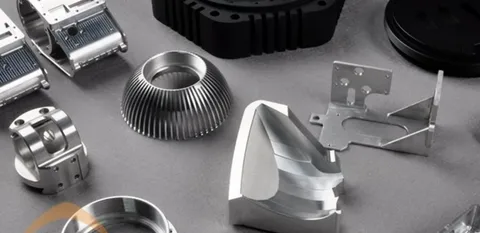

Modern automotive manufacturing has evolved rapidly with the integration of precision engineering and digital fabrication technologies. Among these innovations, automotive CNC parts play a crucial role in delivering high-performance, reliable, and highly customized components for advanced engineering applications. These parts are produced using Computer Numerical Control (CNC) machining, which ensures extreme accuracy and repeatability in production.
Custom CNC solutions are now essential for automotive companies that demand tighter tolerances, faster production cycles, and improved material performance. From engine components to structural parts, CNC machining enables engineers to push the boundaries of design and functionality while maintaining cost efficiency and durability.
The Role of CNC Technology in Automotive Innovation
CNC technology has transformed how automotive components are designed and manufactured. By using computer-controlled machining systems, manufacturers can produce complex geometries with exceptional precision. This is especially important in the production of automotive CNC parts, where even minor inaccuracies can affect performance and safety.
In modern engineering environments, CNC machines allow rapid prototyping and scalable production without compromising quality. This flexibility enables automotive companies to test, refine, and mass-produce parts efficiently.
Key points:
- Enables high-precision manufacturing for complex components
- Reduces human error in production processes
- Supports rapid prototyping and design iteration
- Improves production speed and consistency
- Allows customization for specialized automotive applications
Advantages of Custom Automotive CNC Parts
Custom automotive CNC parts offer significant advantages over traditionally manufactured components. One of the most important benefits is the ability to tailor each part according to specific engineering requirements. This ensures optimal performance in different automotive systems, including engines, transmissions, and suspension assemblies.
Additionally, CNC machining enhances material efficiency and reduces waste, making it a cost-effective solution for both small and large-scale production. The precision of CNC technology also results in longer-lasting components with improved wear resistance.
Key points:
- Fully customizable design options for unique applications
- Enhanced durability and performance under stress
- Reduced material waste and production costs
- Improved compatibility with modern automotive systems
- Better surface finish and dimensional accuracy
Materials Used in Automotive CNC Manufacturing
The selection of materials plays a vital role in the production of automotive CNC parts. Engineers carefully choose materials based on strength, weight, heat resistance, and durability. Common materials include aluminum, stainless steel, titanium, and engineering plastics.
Each material offers distinct advantages depending on the application. For example, aluminum is widely used for lightweight components, while titanium is preferred for high-strength and high-temperature environments.
Key points:
- Aluminum for lightweight and corrosion-resistant parts
- Stainless steel for strength and durability
- Titanium for high-performance and heat-resistant applications
- Engineering plastics for non-metallic and flexible components
- Material selection impacts cost and performance efficiency
Precision Engineering and Quality Control
Precision is the foundation of all automotive CNC parts manufacturing processes. Advanced CNC systems use multi-axis machining to achieve extremely tight tolerances, ensuring that every component meets exact engineering specifications. This level of accuracy is essential in automotive applications where safety and performance are critical.
Quality control systems further enhance reliability by inspecting each part during and after production. Technologies such as laser measurement, digital scanning, and automated inspection ensure consistency across all manufactured components.
Key points:
- Multi-axis CNC machines ensure high precision
- Tight tolerances improve part reliability and safety
- Automated inspection systems reduce defects
- Consistent quality across large production batches
- Advanced measurement tools enhance accuracy verification
Applications of Custom Automotive CNC Parts in Modern Vehicles
The applications of automotive CNC parts are vast and continue to expand with automotive innovation. These parts are used in engine systems, braking systems, suspension components, and even electric vehicle assemblies. Their precision and reliability make them indispensable in modern vehicle design.
As the automotive industry shifts toward electric and hybrid vehicles, CNC machining is becoming even more important. It enables the production of lightweight, high-efficiency components that support improved battery performance and energy management.
Key points:
- Engine components such as pistons, housings, and valves
- Brake system parts requiring high heat resistance
- Suspension components for stability and performance
- EV components including battery enclosures and mounts
- Supports innovation in hybrid and electric vehicle design
Conclusion
Custom manufacturing of automotive CNC parts has become a cornerstone of modern automotive engineering. By combining precision machining, advanced materials, and digital control systems, CNC technology delivers unmatched accuracy, durability, and flexibility. This enables manufacturers to meet the growing demands of high-performance and next-generation vehicles.
As the automotive industry continues to evolve, the importance of CNC-based solutions will only increase. Companies that invest in custom CNC machining gain a competitive advantage through improved efficiency, reduced costs, and superior product quality, ensuring they remain at the forefront of advanced engineering innovation.