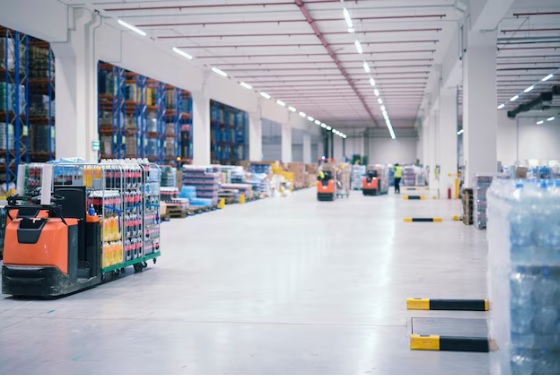

Modern warehouses are now required to accommodate an ever-increasing variety of SKUs with the widening range of products available. Diversity poses a much greater problem than volume when it comes to storage and space management. With a warehouse storage solution, this becomes easier since there is better space utilisation.
Instead of increasing the physical size of the warehouse, organisations are opting for improved designs that will accommodate more SKUs using the same amount of space. This can be accomplished through improved layouts and system integration. This is increasingly critical because efficiency in storing inventory affects overall operational performance.
How Do Storage Solutions Increase SKU Capacity Within the Same Space?
Modern storage systems concentrate more on how effectively the available space is used. Unlike in conventional storage systems, where empty spaces exist between rows, modern storage systems aim at achieving maximum compression yet ensuring accessibility to the stored items.
High-density configurations allow items to be placed next to each other without slowing down their retrieval process. The vertical dimension will also be well-utilised, resulting in greater storage capacity for more SKUs without taking up extra floor space. This will be achieved through well-structured designs, which help accommodate a wider product range within the same footprint.
Why Do Traditional Layouts Struggle With Growing SKU Counts?
As more SKU variations are introduced, managing the warehouse logistics is more difficult through the use of conventional storage methods. Conventional rack systems and static layouts do not have the ability to accommodate changes in products constantly.
- Products often get scattered across different locations, making them harder to track
- Storage gaps increase as different SKU sizes require different spacing
- Picking paths become longer, reducing operational efficiency
- Manual adjustments are needed to reorganise inventory frequently
This makes the process of expanding SKUs impossible without altering storage processes.
How Can Storage Design Improve SKU Organisation and Accessibility?
A good warehouse storage solution emphasises arranging goods with considerations of density and access. Unlike random placement of goods, they are arranged according to their movement patterns, sizes, and frequencies of demand.
Dynamic slotting places fast-moving SKUs in highly accessible areas, whereas slow-selling SKUs occupy compact space. In such a systematic process, the time required to find products is shortened, and picking processes become more efficient. Therefore, a warehouse can store more SKUs without compromising efficiency or facing congestion issues.
What Role Does Automation Play in Managing More SKUs Efficiently?
The introduction of automation technology helps warehouses handle increased SKUs without adding complexity. By implementing a warehouse storage solution that is integrated with automated systems, the process of storing and retrieving items becomes more accurate.
Automation eliminates reliance on human intervention, reducing the likelihood of mistakes when working with extensive SKU ranges. Automation further guarantees that the storage space is utilised optimally at all times. Such control enables SKUs to scale without compromising efficiency.
How System Integration Supports SKU Visibility
The connection between storage systems and warehouse management software enhances inventory visibility. Teams can easily keep tabs on where specific SKUs are stored because all inventory items are tracked through software.
Also, this aids in proper decision-making since it will give you accurate information regarding SKU movement and availability. Therefore, it becomes easy to handle large inventories and also manage storage positions.
How Addverb Supports High-SKU Storage Without Expanding Space
Addverb’s warehouse storage solution offerings, such as Carton Shuttle ASRS, Quadron, are aimed at helping warehouses increase the number of SKUs that can be stored in the same area. The combination of high-density storage and automation results in increased space efficiency and accessibility of the stock.
Integration with Addverb’s WMS, Optimus, will facilitate seamless tracking and coordination of activities in the facility. This allows for effective management of high numbers of SKUs without complicating the process. Addverb’s scalable approach accommodates dynamic inventory requirements without affecting performance across storage and retrieval processes.
Conclusion
Managing higher SKUs without increasing the size of the warehouse has emerged as a critical objective in the contemporary warehouse setting. A proper warehouse storage solution helps organisations optimise their existing capacity while maintaining efficiency and accuracy.
When used in conjunction with robust warehouse logistics systems, it is easy to handle complex inventory challenges. The storage and automation solutions offered by Addverb allow warehouses to maintain the perfect balance without expanding their operational area.